
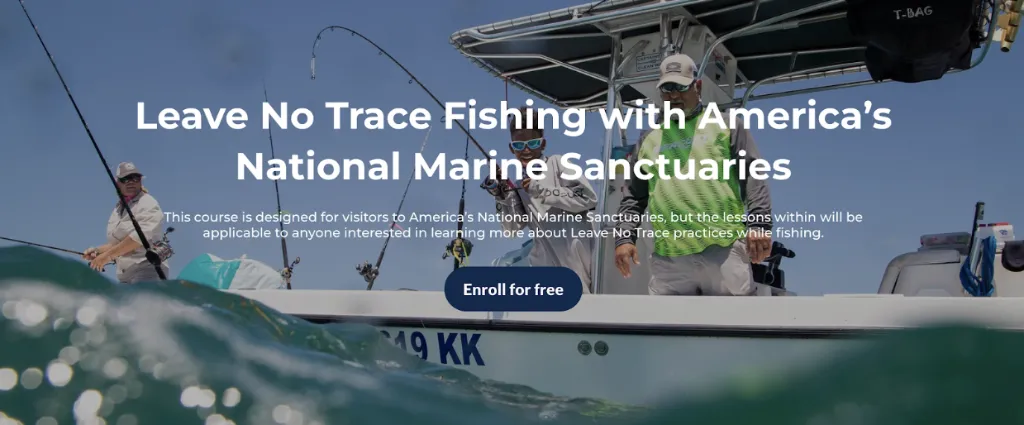
Leave No Trace (LNT), in partnership with NOAA (National Oceanic and Atmospheric Administration) and the National Marine Sanctuary Foundation, has launched a free course on responsible fishing in marine protected areas. The material is in English, but can be automatically translated into several languages — including Portuguese (from Portugal).
The course shows how the 7 principles of Leave No Trace can be adapted to different activities and biomes. In the case of fishing, especially deep-sea fishing in the United States marine sanctuaries, the emphasis is on topics such as fishing line disposal, pollution prevention and respect for aquatic wildlife.
However, it is worth noting that, in making this adaptation, LNT replaced the official Principle 5 (“Minimize campfire impacts”) with a specific pollution principle. Although it makes sense in the marine context, I believe it should not be eliminated. In Brazil, for example, many fishermen camp on river banks or dams and use campfires — which makes it essential to maintain reflection on this impact.
LNT’s strength lies precisely in its flexibility: the principles are universal, but the way to apply them must consider each activity and each biome.
The 7 official principles of Leave No Trace
Before showing how the course adapts the principles to fishing, it is important to recall the 7 “official” principles of Leave No Trace. They form the basis of the entire minimum impact philosophy, being applicable to any outdoor activity — from mountaineering to camping, from nature tourism to fishing.
Knowing these principles is essential to understand how they can be adjusted to different contexts and biomes, without losing their essence.
- Plan ahead and prepare
- Travel and camp on durable surfaces
- Dispose of waste properly
- Leave what you find
- Minimize campfire impacts
- Respect wildlife
- Be considerate of others
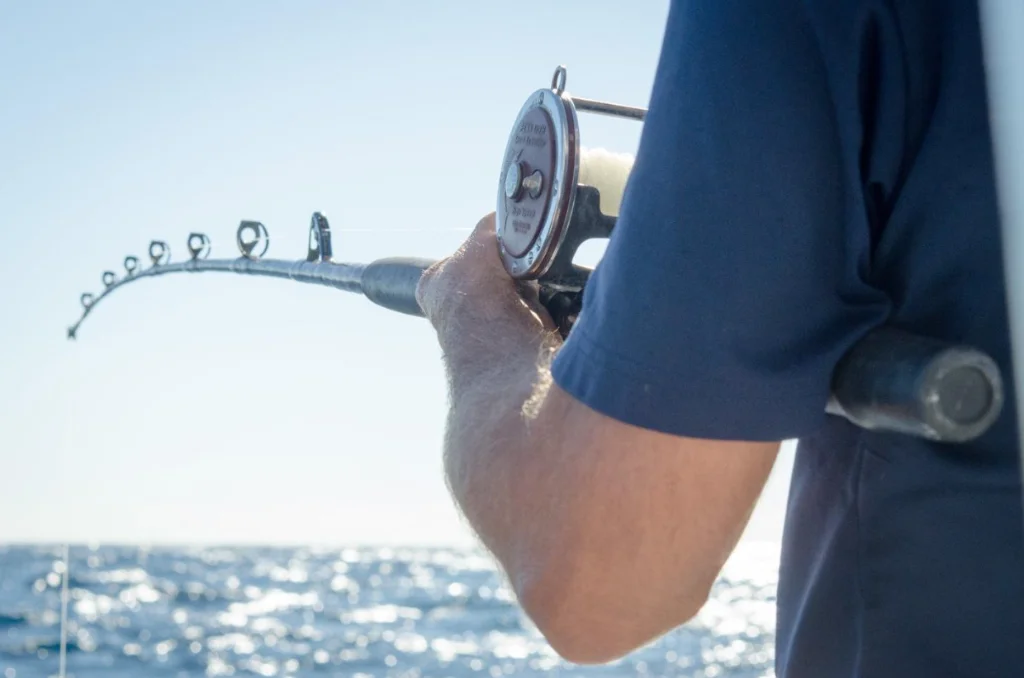
The 7 principles adapted to fishing
In the Leave No Trace Fishing with America’s National Marine Sanctuaries course, the principles were adjusted to the reality of ocean and coastal fishing, with practical examples:
1. Plan ahead and prepare
- Check the weather, remembering that at sea conditions change rapidly.
- Wear a life jacket (PFD) whenever you are on board.
- Have fishing licenses and permits at hand.
- Know the local species and size and quantity limits.
- Prepare for tides, emergencies, and peak visitation periods.
2. Travel on durable surfaces
- Use mooring buoys instead of dropping anchor on coral and fragile surfaces.
- Avoid trampling breeding areas or aquatic vegetation.
- When entering or leaving the water, prefer gravel banks or less fragile shoreline stretches.
3. Dispose of waste properly
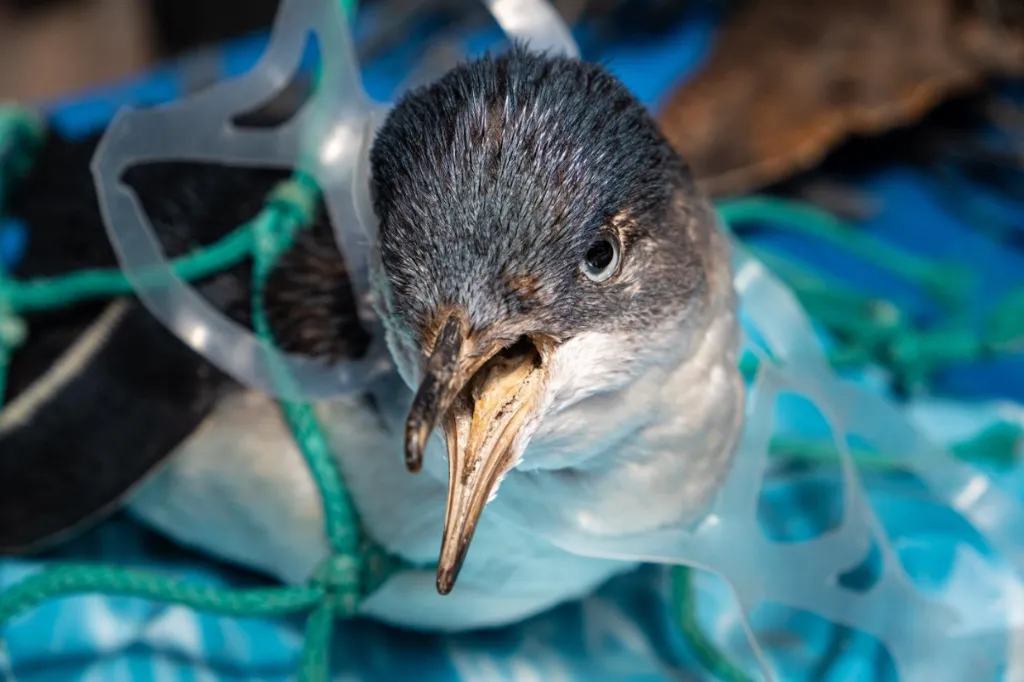
- Bring back all trash, including monofilament lines and bait packaging.
- Use alternative materials to lead to avoid poisoning birds and fish.
- Use fish cleaning stations, disposing of waste in appropriate places.
- Clean the boat before moving to a new location.
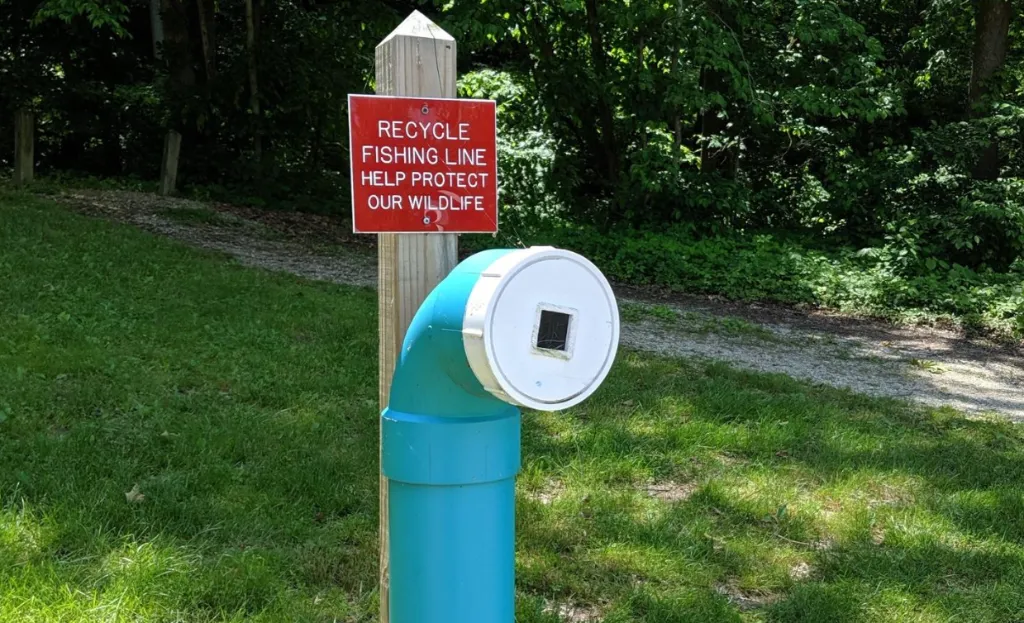
Fishing line disposal collector
4. Leave what you find
- Practice “catch and release” with techniques that reduce fish stress.
- Avoid transporting species or using baits that could introduce invasive species.
- Clean all equipment between fishing trips.
- Observe, but do not touch, submerged cultural or historical structures.
5. Limit use and prevent discharge of pollutants
- Use eco-friendly cleaning products and sunscreens.
- Use absorbents to prevent fuel spills.
- Avoid disposing of sewage and food waste at sea.
6. Respect wildlife
- Never feed animals such as birds, dolphins or sea lions.
- Follow regulations for observing protected species.
- Maintain appropriate distance using the “thumb technique“.
- Release, quickly and humanely, fish you will not consume.
7. Be considerate of others
- Give space to other fishermen already set up at a spot.
- Avoid bringing your boat close to occupied areas.
- Keep the volume low for music and conversations, remembering that sound travels further over water.
- Respect navigation rules, giving priority to non-motorized vessels.
Why take this course?
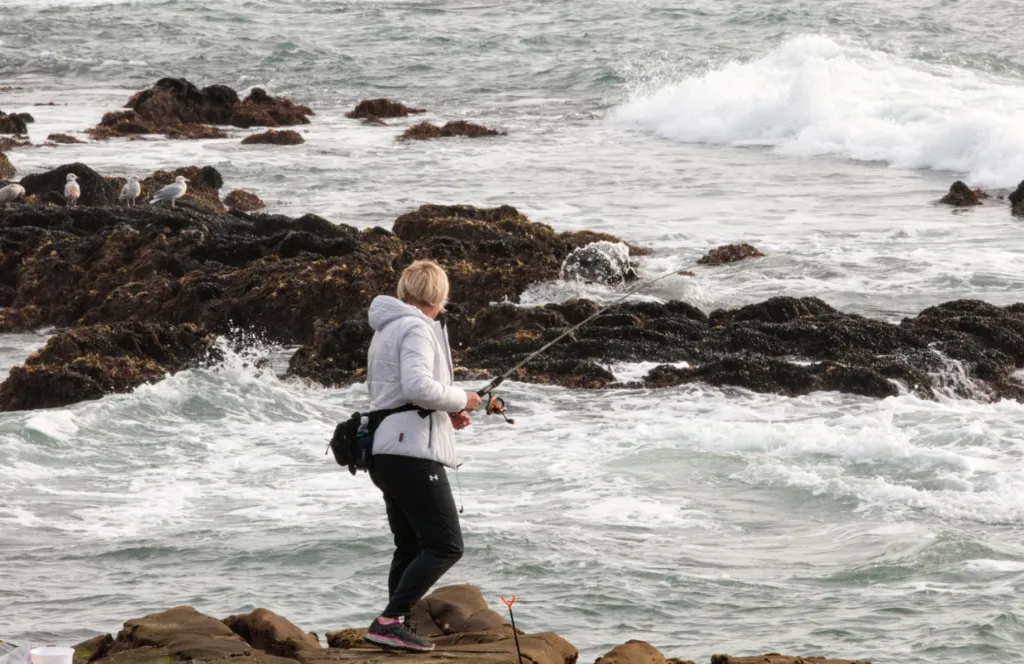
The Leave No Trace Fishing with America’s National Marine Sanctuaries course is a clear and practical introduction to minimum impact applied to fishing. It shows how small actions — such as properly disposing of fishing lines, avoiding pollutants or respecting breeding areas — can make a big difference in the conservation of aquatic environments.
It is an excellent starting point for those who want to understand how Leave No Trace principles can be adapted to fishing and serve as inspiration for other outdoor activities.
At Gear Tips, we believe that initiatives like this help expand the culture of minimum impact, and we increasingly want to encourage people to learn about and apply these principles.
To go further
If you want to deepen your knowledge about Leave No Trace:
- Read our articles: www.geartips.club/blog/tag/lnt
- Learn about the Leave No Trace – Level 1 Instructor course, offered in Brazil by the CAPACITAR Gear Tips Program.
- And of course: access the free Leave No Trace Fishing with America’s National Marine Sanctuaries course
This post is also available in: Português (Portuguese (Brazil)) Español (Spanish)