

Decathlon today has one of the most organized architectures in the outdoor market, although this isn’t always clear to the consumer. Acronyms like NH, MH, MT and SH, numbers like 100, 500 or 900, and different brand names are part of a system that seeks to objectively indicate the type of activity and the practice level for which each product was developed.
If you’ve ever searched for a product from Decathlon, you probably came across these acronyms and numbers without understanding exactly what they mean. However, once you understand this logic, you can see that the system is simple, intuitive and quite efficient.
In this article, you’ll understand how this organization works and learn about Decathlon’s recent process of simplifying and aligning its brands, which is still going through a transition period.
Two brands for mountain sports
Currently, all of Decathlon’s mountain universe is organized around two brands: Quechua and Simond. They are complementary, but have quite distinct positionings.
Quechua: the mountain specialist brand
Quechua is the brand that serves the majority of mountain practitioners. It covers everyone from beginners to regular users, offering products for camping, hiking, trekking, snow activities and recreational winter sports (not including skiing and snowboarding, which are covered by the Wedze brand).
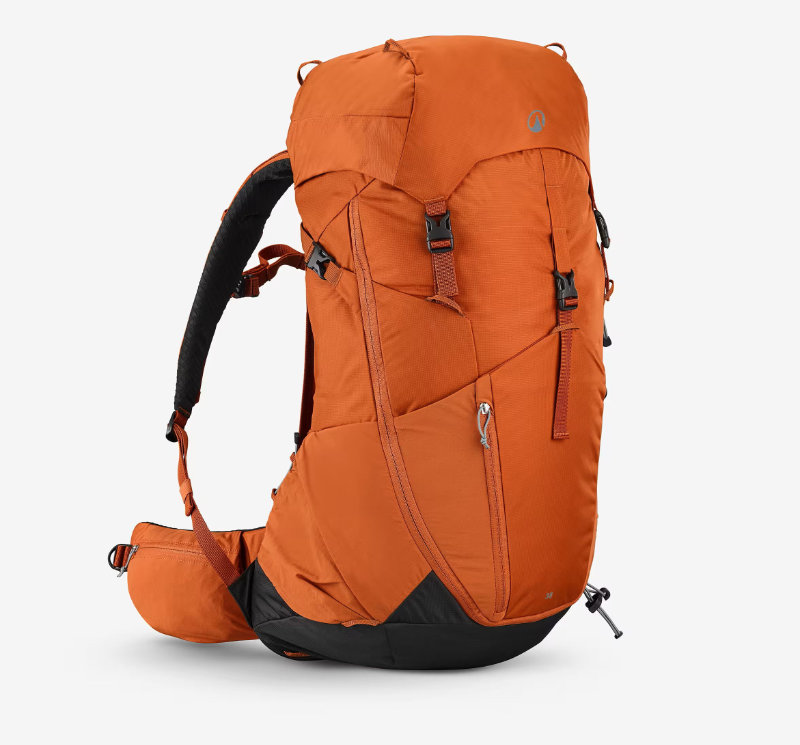
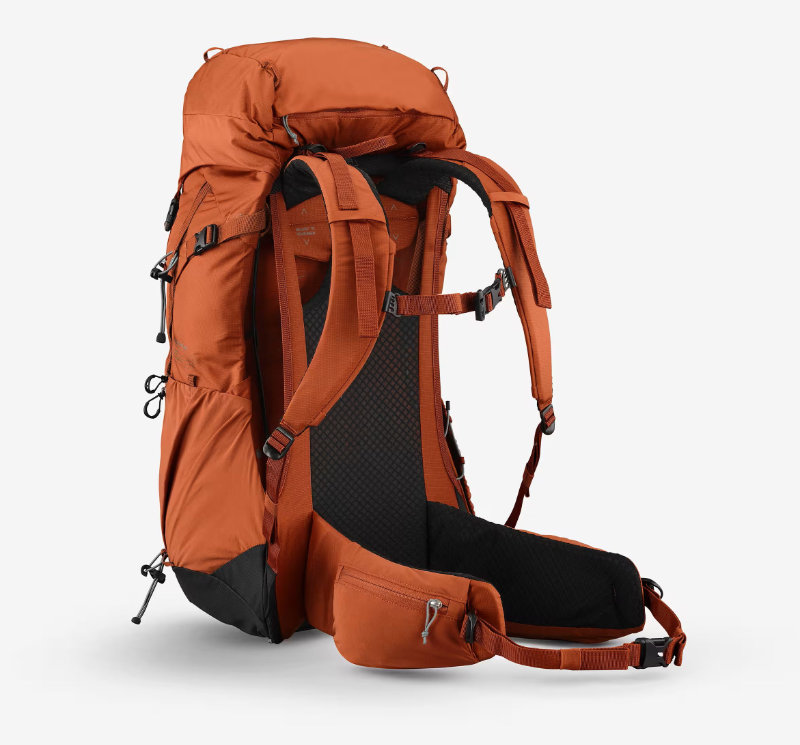
Quechua hiking backpack from the MH500 line
Its focus is on functionality, innovation applied to real-world use, and fair pricing, seeking accessible and reliable solutions for the mountain consumer. On the company’s website, this is clearly reflected in categories such as tents and camping accessories, hiking backpacks, footwear and clothing for hiking, and products geared toward cold and snow.
In practice, Quechua operates mainly at levels 100 and 500, serving everyone from beginners and occasional users to intermediate practitioners who visit the mountains regularly.
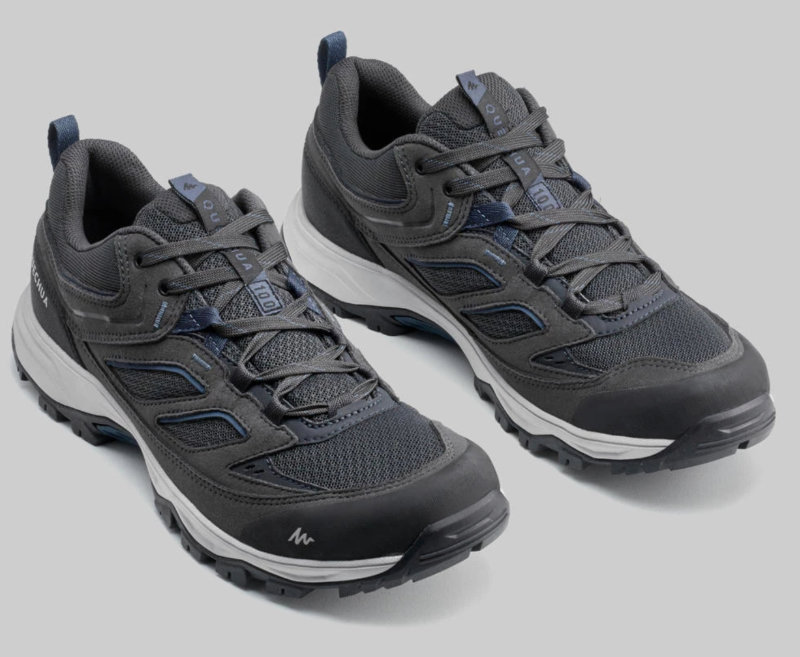
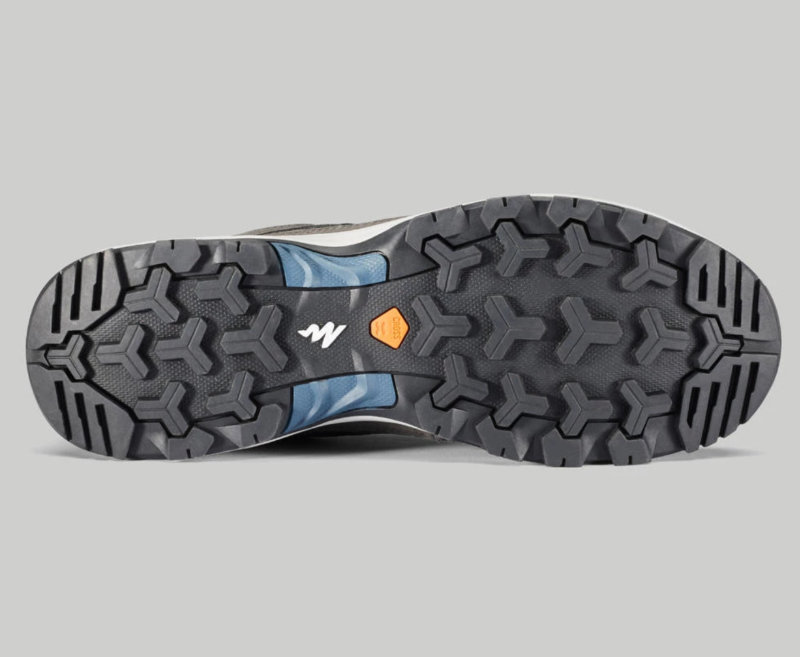
Quechua MH100 hiking shoes
Simond: the expert mountain brand
Simond is the brand dedicated to the expert audience. Traditionally associated with climbing, mountaineering, via ferrata and vertical activities, in recent years it has also come to incorporate technical trekking and ultralight trekking, expanding its scope beyond pure verticality.
Today, Simond develops products for more demanding environments and higher-complexity practices, including climbing, mountaineering, technical trekking, mountain skiing, backcountry skiing and freeride skiing. Its focus is on technicality, performance and sustainability.
Unlike Quechua, Simond does not carry entry-level products. Its range starts at 500, moves up to 900 (performance and intensive use) and, in some specific categories, reaches 1200, aimed at the expert audience.
A brief historical context: what about Forclaz?
Until recently, Decathlon worked with three main brands in the mountain universe: Quechua, Forclaz and Simond. Forclaz was introduced a few years ago specifically to occupy the space of intermediate and advanced trekking, serving especially levels 500 and 900, with a focus on long crossings, larger backpacks and greater autonomy.
In recent months, Decathlon began a movement to simplify, strengthen and align the Decathlon brand with its sports brands. In this process, Forclaz’s positioning was absorbed and redistributed between the two current brands: Quechua, keeping the focus on beginner and intermediate levels, and Simond, which took on technical trekking and the expert mountain audience as well. This explains why references to Forclaz can still be found in older content, especially outside Brazil. In many places, Forclaz products still exist, but are gradually being redistributed under the Quechua or Simond brands.
The acronym system: NH, MH, MT and SH
Besides to the brands, Decathlon uses acronyms that indicate the main type of activity each product was designed for:
- NH – Nature Hiking: Light walks, parks, natural environments and recreational use.
- MH – Mountain Hiking: Mountain hikes, with elevation gain, uneven terrain and greater physical demand.
- MT – Mountain Trekking: Multi-day trekking, greater autonomy, heavier loads and physical commitment.
- SH – Snow Hiking: Walks in the snow and pedestrian activities in cold weather.
It’s important to clarify that the SH line, despite involving snow activities, does not refer to skiing. As mentioned above, for that specific universe, such as skiing and snowboarding, Decathlon works with Wedze, the brand dedicated to winter sports, as well as Simond, for some more technical snow equipment.
The numbers: practice level, frequency and intensity
The numbers that accompany the acronyms don’t simply indicate whether a product is “better” or “worse,” but rather the practice level, frequency and intensity of use for which it was developed:
- 100 → beginner / occasional use
- 500 → intermediate / regular use
- 900 → performance / intensive use
- 1200 → expert (present in some categories)
In practice, this is also reflected in the brands’ positioning:
- Quechua operates mainly at levels 100 and 500.
- Simond operates starting at 500, moving up to 900 and 1200.
How this appears in practice
Looking at Decathlon’s website, this logic becomes clear:
- Quechua NH and MH 100 / 500 products appear in categories such as hiking, mountain walks and camping.
- Quechua SH products are associated with snow walks and cold weather, with no focus on skiing.
- MT products appear both in Quechua lines (accessible trekking) and in Simond lines, when the focus shifts to technical trekking.
- Simond 500 / 900 / 1200 products are concentrated in the categories with the highest technical demands, such as climbing, mountaineering, technical trekking and advanced mountain sports.
So, the brand indicates who the product was designed for, the acronym indicates the type of activity, and the number indicates the intensity and frequency of use.
A simpler, more coherent and transparent system
With this reorganization, Decathlon built a clearer and more coherent ecosystem for the consumer. Simplifying down to two mountain brands, combined with the consistent use of acronyms and practice levels, makes it easier to choose the right gear and reduces mistaken comparisons between products designed for different uses.
For those who practice outdoor activities — and especially for those who guide, teach or produce content about the mountains — understanding this logic is essential for making appropriate recommendations and helping other people progress safely and efficiently in the natural environment.
This post is also available in: Português (Portuguese (Brazil)) Español (Spanish)