

Talking about poop may seem strange, but it’s a topic that’s part of planning any activity in a natural area without a bathroom or other sanitary facilities.
Principle 3 of Leave No Trace (Dispose of Waste Properly) also applies to human waste, toilet paper, and other materials used for personal hygiene. Depending on the rules and characteristics of the area, feces can be buried properly or must be packed out.
In this article, we’ll talk about the second option: where to poop, what materials can be used to collect it, how to transport everything safely, and what to do with the waste after the activity is over.
Bury it or pack it out?
The decision starts with the local rules. Before you go, check the guidelines from the protected area, park, property, or agency responsible for the area. If the regulations require all human waste to be removed, there’s no choice to make. You’ll need to bring a suitable system to pack everything out.
This requirement is common in environments where burying doesn’t work well. It could be a high-mountain area, rocky terrain, a very dry region, a snow-covered location, a cave, a canyon, or a big climbing wall.
The same may apply in areas with heavy visitation. Even if the soil can break down a certain amount of organic matter, it may not be able to absorb the waste produced by hundreds of people passing through the same place.
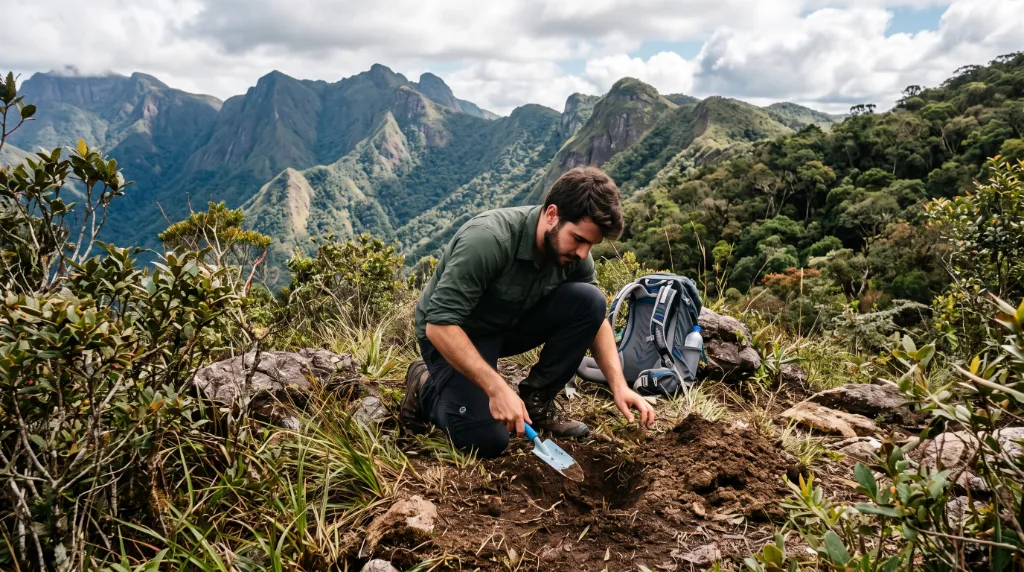
Illustrative image generated by artificial intelligence
When there’s no specific rule, we still need to evaluate the characteristics of the environment:
- Is the soil deep enough?
- Is there organic matter and biological activity that can help with decomposition?
- Is the ground frozen, waterlogged, or covered in rocks?
- Is there a risk of contaminating rivers, lakes, or springs?
- Do many people camp and relieve themselves in that same area?
The absence of a ban doesn’t mean the location is suitable for burying waste. When in doubt, packing the waste out is usually the most conservative option.
In another article, we’ll explain how to choose the location and properly dig a sanitation hole, also known as a cat hole. Here, we’ll focus on how to collect and carry everything back out.
Where to poop?
If you’ve decided to remove the waste from the area, the first thing you need to bring is a collection kit. This is where you’ll do your business. The kit can be put together by the user or purchased ready-made.
A simple solution is to prepare a set with newspaper sheets, quicklime, and a bag to hold the material. Whenever it’s compatible with how you’ll transport it and where it will end up, you can use a paper bag (like a bread bag) or a compostable bag.
The newspaper is spread out on the ground and serves as the collection surface. The quicklime should be sprinkled over the poop. After use, the newspaper is folded closed with the contents inside and placed in the bag.
Keep in mind that quicklime must be stored securely. It’s important to avoid contact with your skin, eyes, and airways.
Some products, such as the Lixeira Portátil Gaia Adventure come with this complete set, made up of newspaper, lime, and bags.
Another option is to use a WAG bag.
WAG bag: a ready-made collection kit
A WAG bag is a system designed specifically for collecting and containing human waste.
The kit usually includes a large bag where you relieve yourself, an absorbent or gelling agent, and a second, sturdier bag, typically with a zip-top closure similar to a ziplock. Some models also include toilet paper and a wipe for cleaning your hands.
The agent inside helps absorb liquids, stabilize the contents, and control odors. After use, the collection bag is sealed and placed inside the outer pouch that comes with the kit.
In the video Kit de Banheiro Portátil Go Anywhere Toilet Kit, we show how one of these solutions works and how it is used.
WAG bags are relatively common at some outdoor destinations, especially in the United States, but they can still be hard to find in other countries.
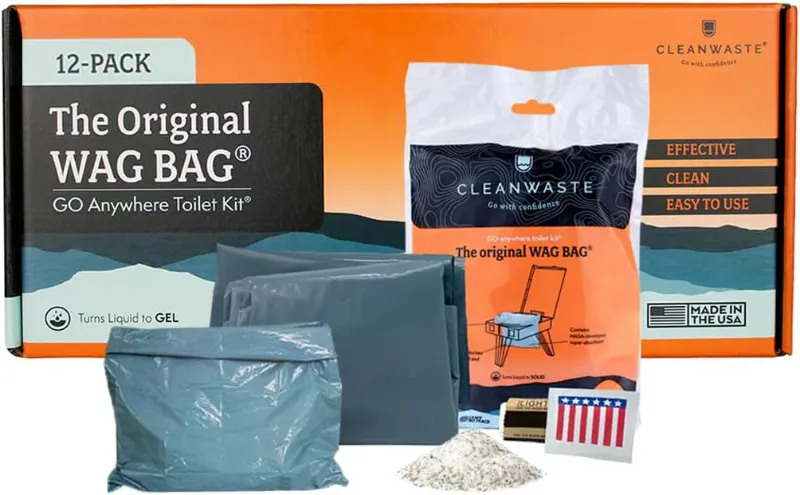
When we travel to a place where they’re available, it’s worth buying a few. At Gear Tips, we recommend keeping at least one in your pack as an emergency option, even when your original plan is to bury your waste.
It can be useful if the soil is shallow, rocky, or frozen. It can also help in an unexpected situation, such as when the area is very crowded, there’s no suitable place to dig, or the group needs to stay in a more sensitive environment.
A WAG bag replaces the combination of newspaper, lime, and bag. It is the collection kit. Even so, after it’s been used, you’ll still need to put it inside another container to carry it safely.
How to carry the poop?
The collection kit shouldn’t be carried loose inside your pack. Even if a WAG bag has a reinforced outer bag, it’s safer to put the used kit inside a second layer of containment. This additional layer protects against punctures, leaks, closure failures, and compression from the rest of your gear. It also helps keep waste separated from your food, clothing, cooking utensils, and hydration system.
There are different solutions for this. The container can be rigid, like a shit tube, or flexible, like a portable waste bin or a bag made specifically for waste.
In Brazil, the name shit tube has become quite well known. In some cases, it’s used generically to refer to the whole system used to bring waste back out. Technically, however, the shit tube is the rigid container. Waste bins and waterproof bags serve a similar purpose, but they’re built differently.
Shit tube
The shit tube, also called a poop tube in some countries, is a rigid container used to carry the collection kit after use.
Its main advantage is protection against punctures and crushing. This can be especially important when the container is attached to the outside of your pack or when the activity takes place in an environment where your gear will take a lot of impacts.
The Terratop sells a Lixeira Portátil Shit Tube with a capacity of two liters (about 0.5 gallon). In addition to the rigid container, the product comes with the materials used for collection, such as sheets of paper, bags, and quicklime. In this case, the solution combines the collection kit and the carrying container.
You can also put a used WAG bag inside the tube, as long as the volume of the package is compatible with the container’s capacity.
A shit tube can also be built using PVC pipes and fittings. During the Gear Tips 1st Online Trekking Congress, held in 2018, Carlos Moura of Mantiex explained the importance of this equipment and showed how to build a homemade model. The full talk is available in the video Shit Tube: Learn Why It Matters and How to Make One.
We also produced the video Shit Tube: What Is It For? Is It Really Necessary?, which helps explain the function of this type of equipment.
Before using a homemade model, it’s important to check the strength of the material, the quality of the seal, and the security of the connections.
Capacity also needs to be planned. The volume you’ll need depends on the number of people, the length of the activity, and the amount of other waste you’ll be carrying.
Gaia Adventure Lixeira Portátil Outdoor
The Gaia Adventure Lixeira Portátil Outdoor is a flexible alternative for carrying the used collection kit. It expands as it receives contents and takes up less space when empty. It also has a separate compartment for storing materials before use.
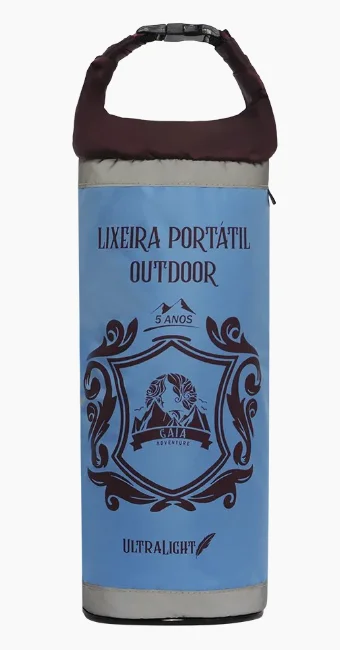
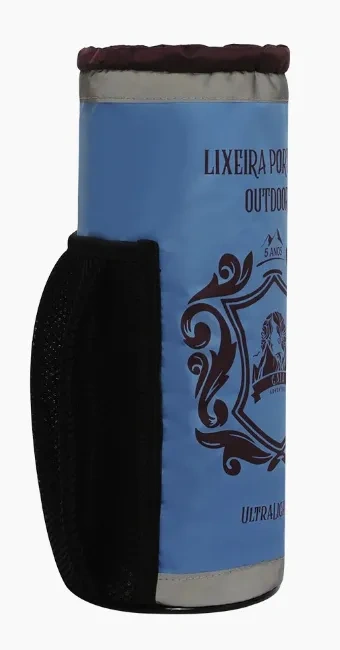
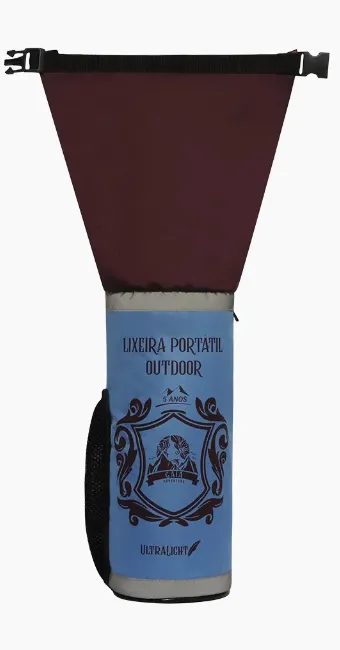
The product comes with newspaper, quicklime, and bags. In this case, it also combines the collection kit and the carrying container in a single commercial solution. You do the collection with the newspaper, lime, and bag, and once that set is sealed, you put it inside the waste bin.
You can also use a WAG bag inside it. In that case, the WAG bag replaces the combination of newspaper, lime, and bag, while the waste bin continues to provide protection and transport.
Because it’s flexible, the waste bin takes up less space at the start of the activity. As it receives waste, its volume increases.
In addition to human waste, it can carry toilet paper, sanitary pads, wipes, packaging, food scraps, and other waste that shouldn’t be left in the natural area.
Sea to Summit Trash Dry Sack
Another solution used by Gear Tips is the Sea to Summit Trash Dry Sack. It was developed to carry the trash produced during outdoor activities. It is a reinforced dry sack with an attachment system for securing it to the outside of your pack. It has a roll-top closure, sealed seams, and an internal system that helps keep the trash bag in place.
The Trash Dry Sack is not a waste collection kit. You should not poop directly into it. Its purpose is to carry a WAG bag or another kit that has already been used, sealed, and packed.
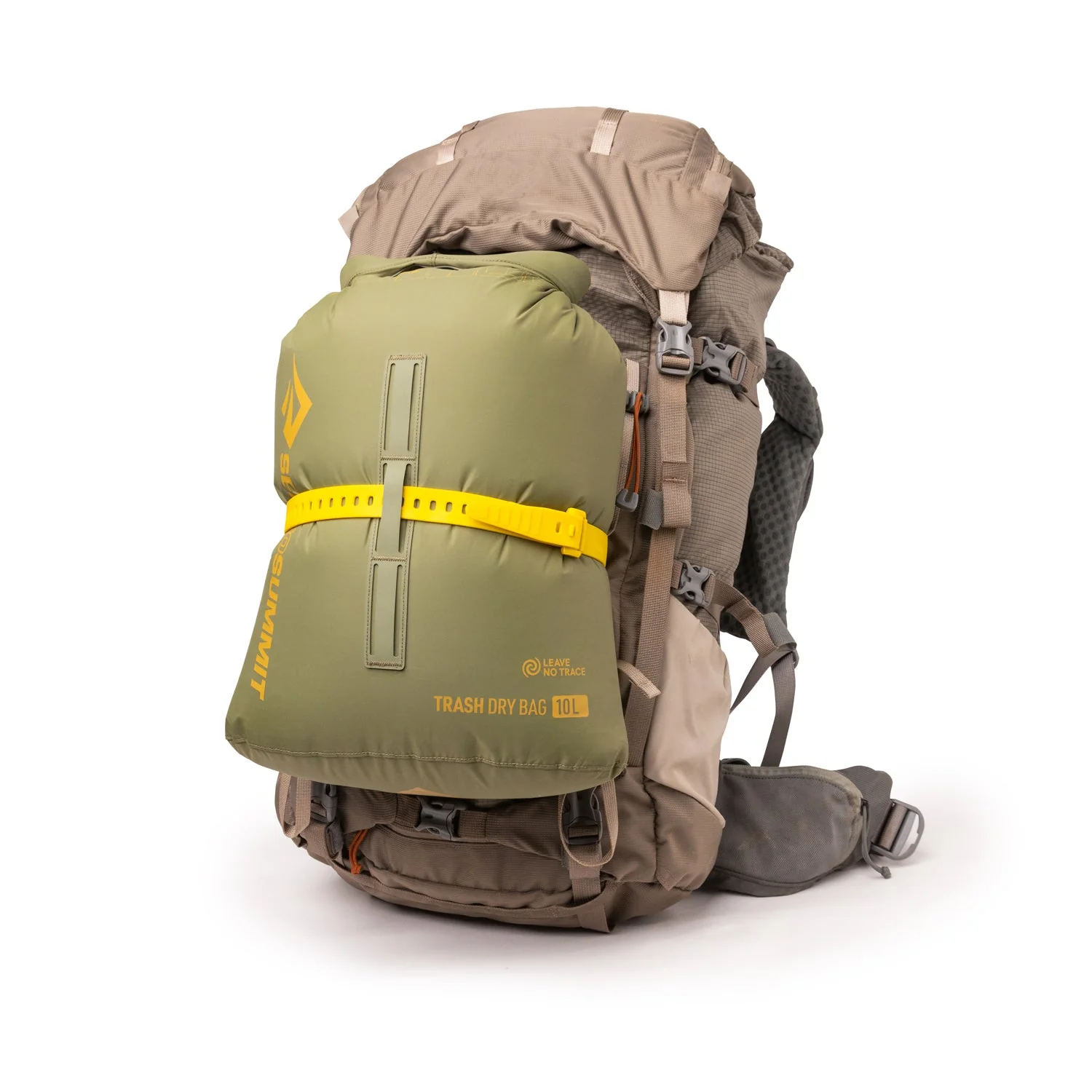
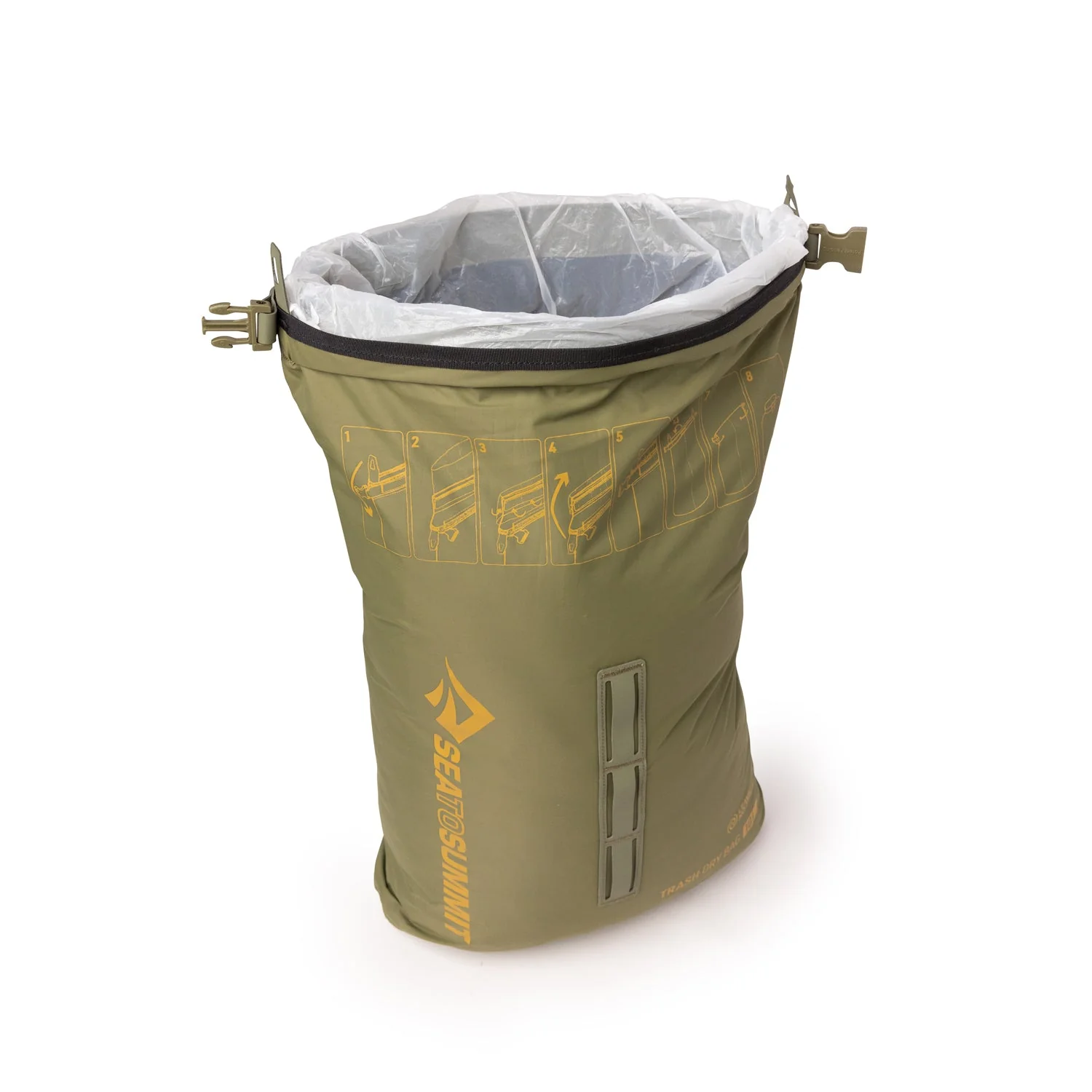
It creates a second layer of protection and can be attached to the outside of a backpack, a kayak, or other equipment. It can also be used to carry toilet paper, menstrual pads, wipes, packaging, and other waste produced during the activity.
When it is used to carry human waste or hygiene materials, it is best to reserve it exclusively for that purpose and clean it properly after use.
The Best Way to Clean Up Is Not to Rely on Toilet Paper
Toilet paper also needs to be considered in your planning. Even in places where burying feces is permitted, at Gear Tips we recommend packing out used paper. It can take a long time to break down, be dug up by animals, or resurface because of rain and erosion.
Besides the environmental impact, scraps of paper scattered around trails, viewpoints, and campsites are an unpleasant sight.
Wet wipes must always be packed out. Even those marketed as biodegradable should not be buried.
The best way to clean up, however, is not to rely on paper alone. Washing the area with water and soap cleans better and also reduces the amount of waste you will have to carry.
In the article CuloClean: The Portable Bidet for Going Number 2 in the Backcountry, we show how a small adapter attached to a bottle can be used for personal hygiene during outdoor activities.
Water should be carried well away from rivers, lakes, and springs before you clean up. Washing should never be done directly in a body of water.
After handling waste and the materials used to collect it, it is also essential to wash your hands thoroughly.

Other Hygiene Waste Also Needs to Come Back with You
The same logic applies to menstrual pads, applicators, liners, diapers, wet wipes, packaging, and other personal hygiene products. These materials should not be buried or left in the environment. They need to be placed in a tightly sealed container and carried to an appropriate disposal site.
Used menstrual products deserve special attention because of the possibility of leaks and odors. Ideally, keep them in a dedicated, durable container, separate from food and cooking utensils.
In the article Menstruation: How to Keep Enjoying the Outdoors Safely and with Minimal Environmental Impact, we cover menstrual hygiene planning and the different ways to carry this waste during hikes, traverses, and expeditions.
A shit tube, a portable trash container, or a bag designed for carrying waste can be part of a broader system for bringing different hygiene materials back with you.
The Trail Is Over. Now What?
Bringing human waste out of the natural area is an essential part of the process, but your responsibility doesn’t end there.
What you do with the contents depends on the kit you used. When we use a commercial WAG bag, we need to follow the manufacturer’s instructions and the local rules. Many of these kits contain agents that absorb and stabilize the waste, and they were designed to be disposed of in sanitary landfills. In some regions, they can go in the regular trash. In others, there are dedicated collection points for WAG bags.
So reading the product packaging alone isn’t enough. You also need to check how the waste system works where your activity ends.
When the collection kit is made with newspaper, quicklime, and a bag, the whole package should stay sealed. It should not be opened or dumped into a toilet.
Besides the newspaper and the bag, which can clog plumbing, the lime also requires caution. Quicklime is made of calcium oxide. When it comes into contact with water, a reaction occurs that releases heat and forms calcium hydroxide, a strongly alkaline substance.
This rise in pH helps reduce odors and inactivate some of the microorganisms present in the waste. That can be useful during packing and transport, but it does not mean the material can be released into the sewer system, a septic tank, or a biodigester. These systems depend on biological processes that can be harmed by highly alkaline substances.
The most appropriate destination for this type of package is the solid waste system that sends waste to a licensed sanitary landfill, as long as the local service confirms that it accepts sanitary waste of this kind.
If the town where your traverse ends doesn’t have adequate infrastructure, the shit tube should not be emptied into the first trash can you find. The material needs to stay in the container until you can reach a place with a confirmed disposal option.
This may mean carrying the waste to another town or taking it home with you. Before putting the package in the regular trash, make sure that the municipal collection service sends its waste to a sanitary landfill and accepts this type of material when properly packaged.
We should not dump the contents into storm drains, rivers, vacant lots, pit toilets, or composting toilets. The best solution is still to plan the disposal before the activity. When you ask about the trail rules, also ask where used kits should be dropped off.
When there is no clear answer, the responsibility remains with whoever produced the waste. Packing it out means carrying it until you find a truly appropriate disposal site, not just the first trash can.
Is It Possible to Compost Human Waste?
There are controlled systems capable of treating and composting human waste. This doesn’t mean, however, that feces can be put in just any home compost bin or mixed with food scraps.
This type of treatment requires technical knowledge, proper infrastructure, and control of factors such as temperature, moisture, and time.
In another article, we present an initiative developed by Muriqui Brasil, made up of guides from the Petrópolis region, focused on the proper disposal and composting of waste brought out from the Petrópolis–Teresópolis traverse.
This experience broadens the discussion. It isn’t enough to tell visitors to pack out their waste. Parks, clubs, tour operators, event organizers, and communities near these destinations also need to think about how this material will be received and treated.
Packing Out Your Poop Should Become the Norm
The first time, the idea of carrying your own waste may seem strange. With planning and the right materials, however, the process becomes relatively simple, safe, and hygienic.
First, you need to choose a collection kit. It can be made with newspaper, lime, and a bag, or bought ready-made, like a WAG bag.
Then, the used material should be placed in a durable container for transport, which can be a shit tube, a portable trash container, or a bag designed for waste.
Finally, you need to make sure the waste is properly disposed of after the activity.
The Leave No Trace Principle 3 doesn’t end when we remove waste from the natural area. Disposing of it properly also means carrying it safely and making sure it is properly disposed of after the activity.
This post is also available in: Português (Portuguese (Brazil)) Español (Spanish)