

Eliseu Frechou traded São Paulo’s capital for São Bento do Sapucaí in 1989, when the Pedra do Baú complex had fewer than ten climbing routes. At the time, adventure tourism was just beginning to emerge in Brazil, and little was said about the sport.
Determined to build his life there, he founded the first Brazilian school dedicated to rock climbing, opened around 250 routes between São Bento do Sapucaí and Itajubá (today the region totals approximately 450) and created a local mountain rescue group.
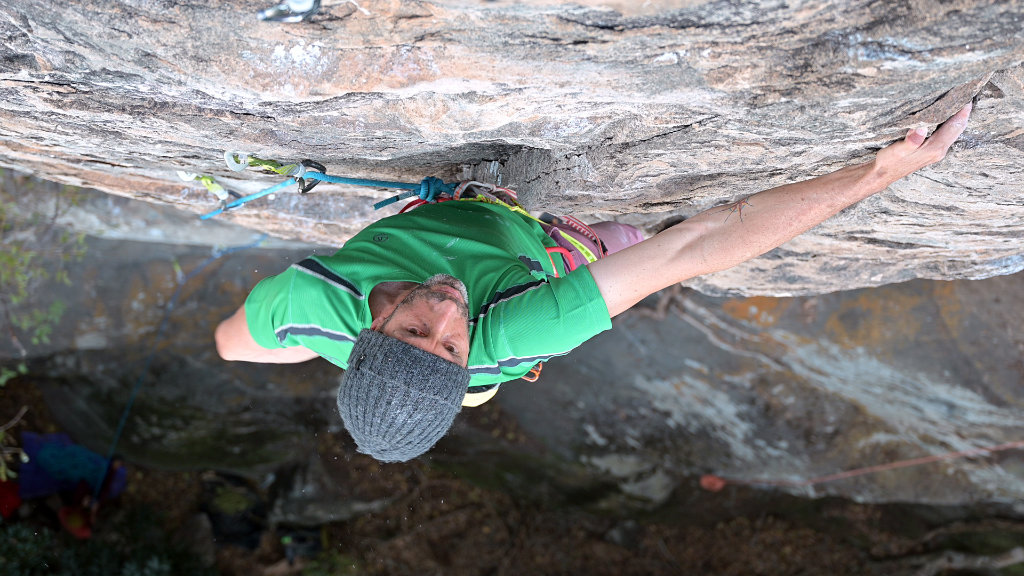
Eliseu Frechou, at Pedra da Divisa – São Bento do Sapucaí
Another of his great achievements, as important as his personal conquests, was recording three decades of climbing history through the Mountain Voices newspaper, the longest-running publication to date dedicated to the world of the sport in the country. Alongside this, he also began devoting himself to film and documentary production.
Recently, Eliseu rallied the climbing community with the Faz o Nó campaign (campaign Make the knot), created to draw attention to the growing number of accidents caused by inattention to a simple practice: tying a stopper knot at the end of the rope. In less than three hours, the hashtag #escaladasegura had already gathered more than 1,000 pieces of content produced and published by prominent figures in the community, showing how to carry out the procedure.
By thinking not only about his individual journey, but about spreading climbing from the very beginning, Eliseu Frechou became a reference on the national scene, transcending the role of athlete and inspiring generations.
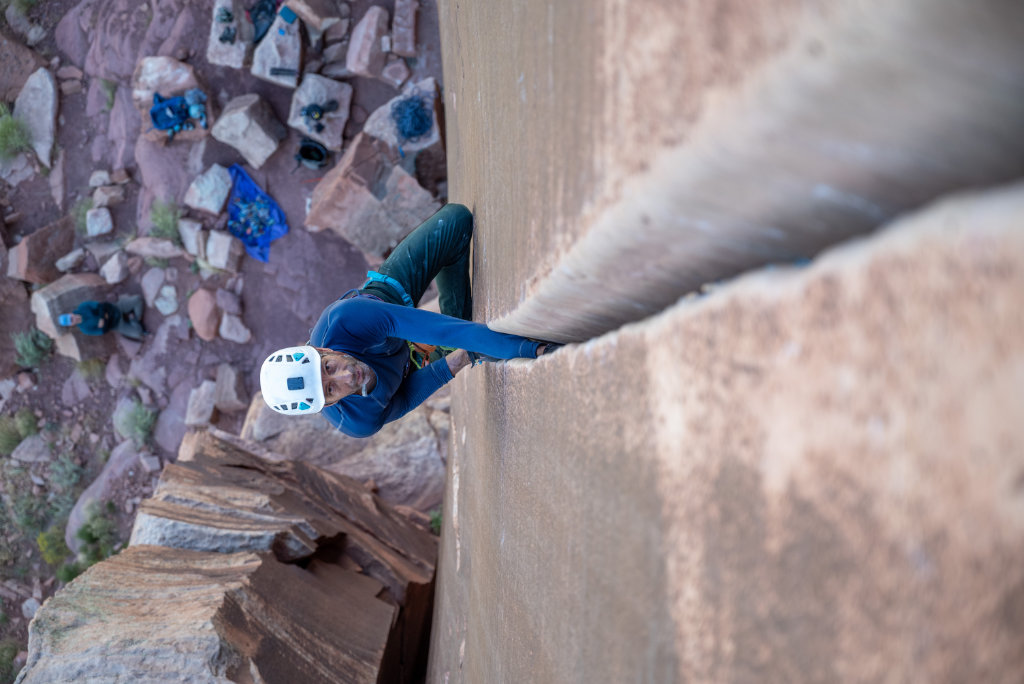
Eiseu Frechou at Indian Creek, in Utah – USA
From the first contact with climbing to big walls and other extreme achievements
His passion for climbing was born at age 15, when Eliseu took part in a mountaineering demonstration at Pico do Jaraguá, alongside a group of scouts. “I went crazy! The mountaineering on show was very old-fashioned, but I was hooked by the ropes and carabiners.”
Later, he joined various expeditions and became a member of the Clube Alpino Paulista (CAP). He recalls that at the time, there was only one store selling hiking gear, with almost nothing geared toward climbing. The scarcity led him to manufacture his first carabiners.
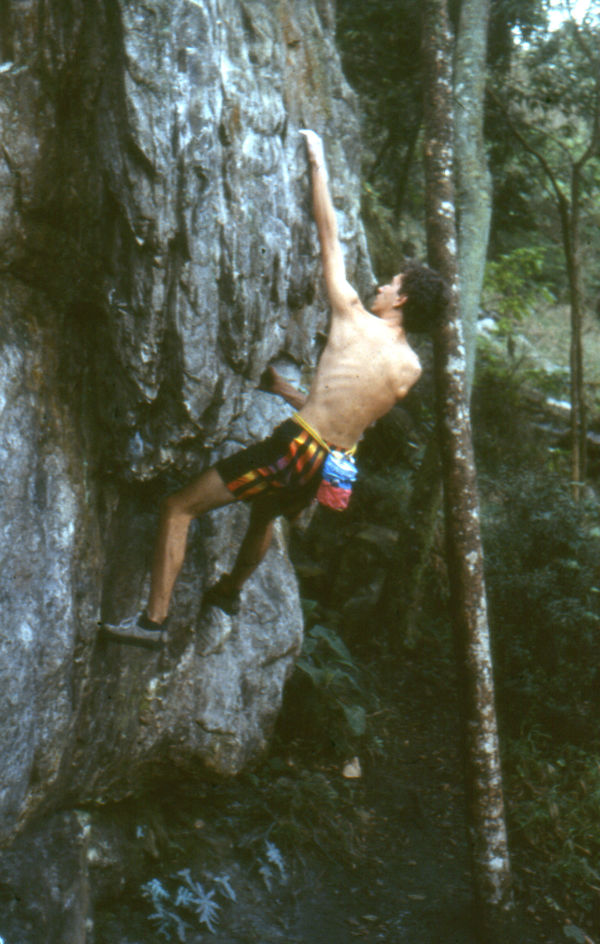
Eliseu Frechou, at Pico do Jaraguá – 1987
Today, at 57, his résumé includes major achievements in solo, pair and team climbing. On the national scene, standouts include Neurônios Fritos and Distraídos Venceremos, in São Bento do Sapucaí (SP), and Terra de Gigantes, in the Serra dos Órgãos (RJ); as well as around three hundred new routes opened in the Serra da Mantiqueira region, in various styles and up to grade 10 difficulty.
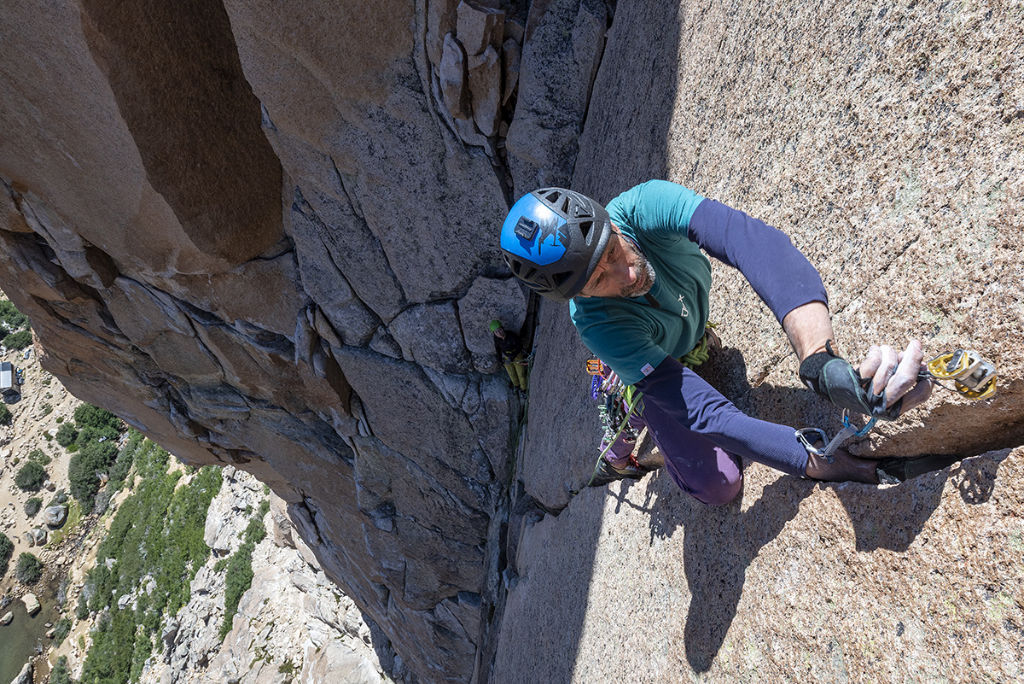
International achievements include big walls in Yosemite National Park, California, such as Half Dome via the Northwest Regular Route, and El Capitan via the Zenyatta Mondatta route, one of the most difficult ever climbed by Brazilians. In the same park, he also climbed Yosemite Falls, the largest waterfall in America and the fifth highest in the world.
In Africa, in Mali, under an intense sun, he established the Solução Suicida route with a Brazilian team. Also in that country, he opened several routes and boulders, including Filhos do Sol and Blowing in the Wind.
The beginning of his legacy for climbing
When he decided, at age 20, to move to São Bento do Sapucaí, Eliseu sold two prints received as gifts from artist Aldemir Martins to cover the first two months of rent and one month of food. “I ate a lot of rice and zucchini to pay the rent,” he says.
His first initiative was to guide people up to Pedra do Baú. Already in his first year there, he created the first school dedicated to climbing in the country, Montanhismus, through which most of the guides currently working in the sport in Brazil have passed, including Silvério Nery, Daniel Casas and Felipe Guimarães.
Eliseu’s goal was to develop a personalized training method capable of meeting the most varied objectives of climbers arriving from different regions. “Some want to open routes, others want to go to Yosemite, others to Patagonia. These are different types of climbing, requiring different techniques. That’s why the courses are personalized. We need to understand what the person needs and the environment they live in.”
To this day, Eliseu remains at the helm of climbing courses and conducts individual sessions as a guide at various destinations, being the most sought-after professional for those wishing to experience climbing in Yosemite. In 2026, he will return there for the 17th time.
Building the memory of climbing
Mountain Voices newspaper: three decades recording climbing
While building his path in the mountains, Eliseu was also helping to build an important archive of climbing history in Brazil, by giving a voice to other climbers. Over 30 years, he edited 172 editions of the Mountain Voices newspaper in São Bento do Sapucaí, which came to an end at the start of the pandemic.
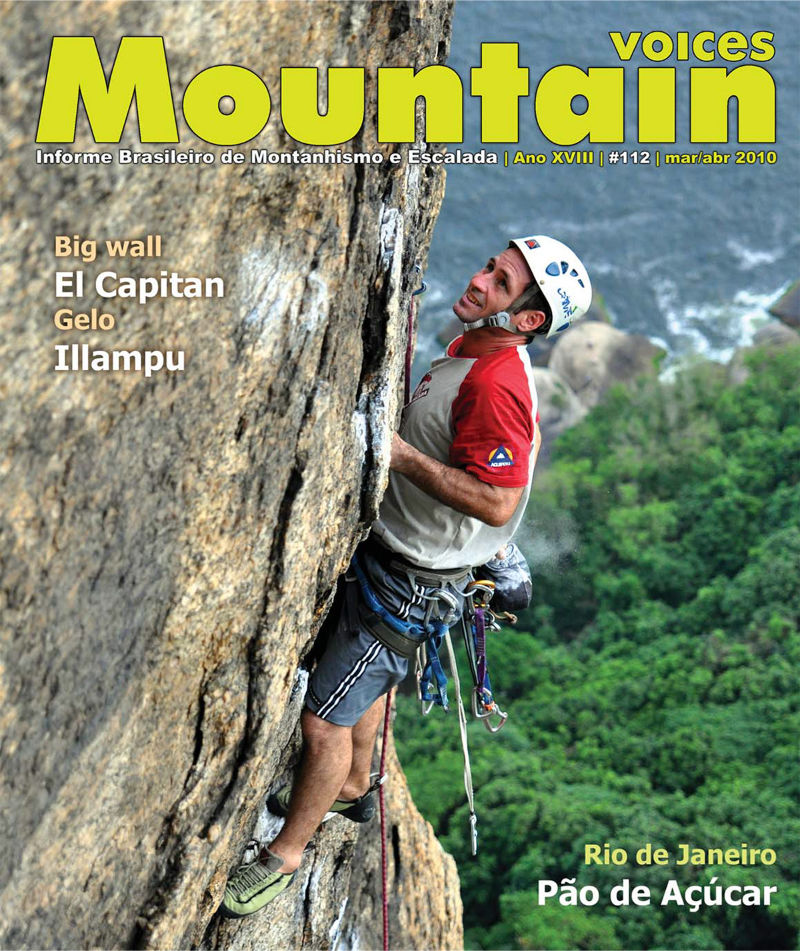
Mountain Voices newspaper
The publication aimed to put the city on the climbing map of São Paulo and Brazil, as well as to spread news from the sport’s scene. If a climber came to him with a good story to tell, Eliseu would open up space for them to narrate their own experience in the first person, inspiring others.
“I felt the need to keep information circulating and always prioritized the print format for its credibility. I believe the written word on paper carries a lot of weight. The PDF was just another way to widen circulation. I encouraged people to send me their stories even on scraps of paper, which I would then type up. I still have many of those letters today.”
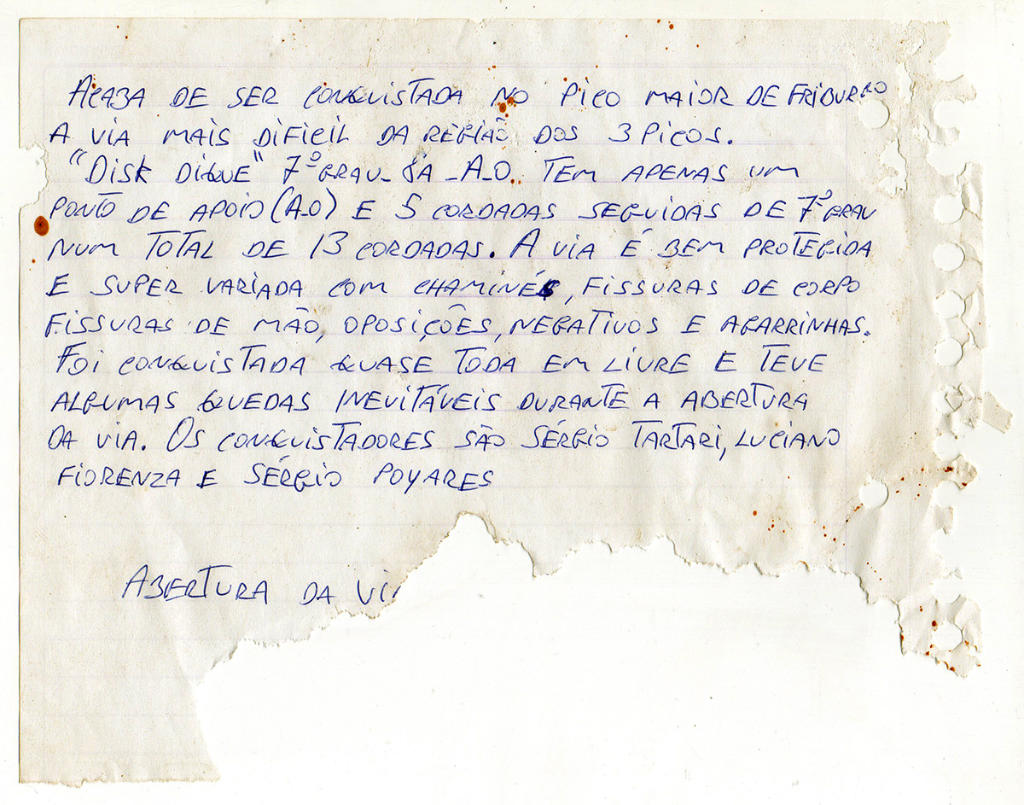
Sérgio Tartari’s note for Mountain Voices
Mountain Voices was free and circulated bimonthly, with a print run of 10,000 copies per edition. For those who preferred to receive the newspaper at home, a subscription option was also available. Part of this archive remains available today in digital format, covering editions 80 through 171.
Films, documentaries and a podcast for different generations
Dividing his hands between the rocks and the camera, Eliseu also stands out in film and documentary production, contributing to expanding and preserving the memory of climbing in the country.
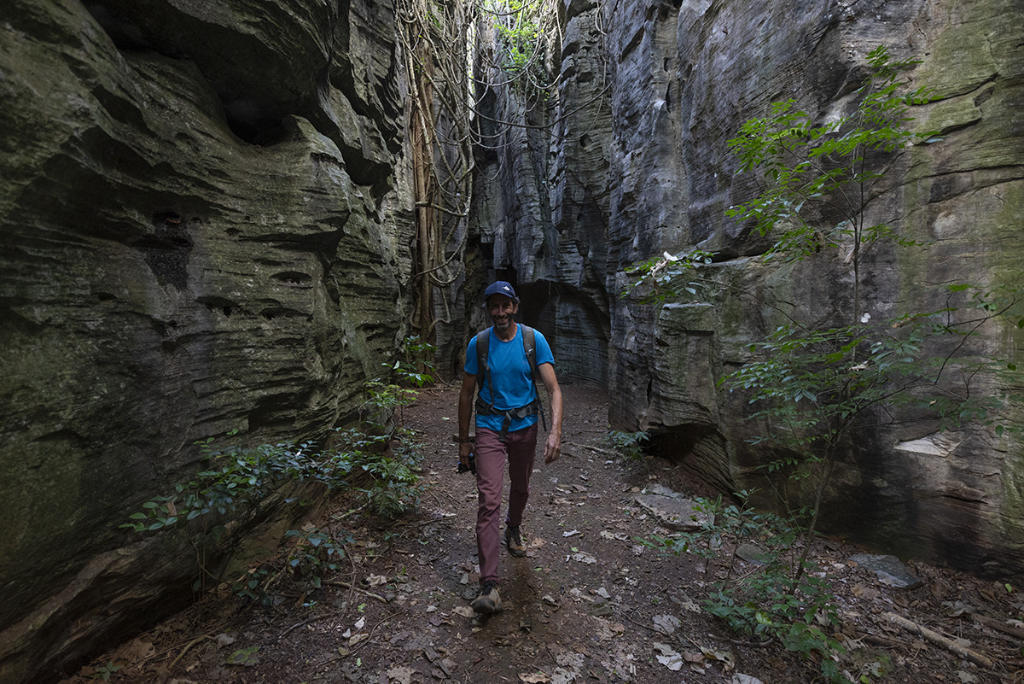
The climber, who once appeared on Fantástico after making the first ascent of the north face of Pedra do Baú, produced in 1999, originally for the SporTV channel, the Terra de Gigantes documentary, considered the first Brazilian climbing film to be commercially distributed nationwide.
“I set my mind on climbing a route on the Serra dos Órgãos — Terra de Gigantes, one of the hardest in Brazil. We shot all the wall footage with a very small camera recently released by Sony, using tiny tapes, but one that produced images of sufficient quality for TV.”
Among the highlights of his productions is the Lobotomia series, made up of three films that brought together important names in climbing of the era across different Brazilian settings. The first, Escalada Brasil, traveled through various regions of the country, from Ceará to Rio Grande do Sul. The second, Baú e Região, focused on Pedra do Baú and southern Minas Gerais, hit stores in 2002 and was a major VHS sales success. The third, Porcos Voadores, documented climbs in Minas Gerais, Rio de Janeiro, São Paulo, Rio Grande do Sul, Paraná and Fernando de Noronha.
Eliseu also produced climbing features for ESPN for nine years and made other films throughout his career. Between 2023 and 2024, he dedicated himself to his first original web series, Profissão Montanhista, which follows a year of his journey in the mountains. The first season brings together 13 episodes.
In addition to his audiovisual productions, another resource Eliseu shares with the community is the On The Rocks podcast, launched during the pandemic. Over more than 50 interviews, he talks with figures from mountaineering and climbing, many of them known over the years through the newspaper and his productions, gathering stories that help preserve the memory of the sport in the country.
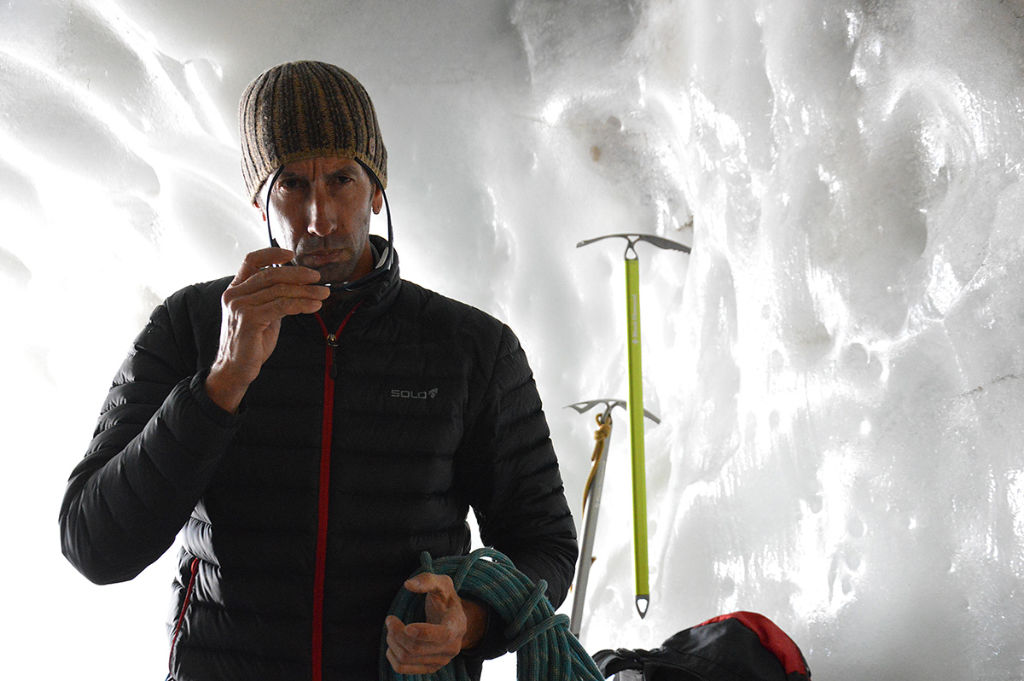
A look back and a step forward
By dedicating himself to climbing, Eliseu Frechou is building a legacy that goes beyond his own journey. Just as it happened to him at age 20, when he found in the sport the possibility of fulfilling a dream, today he also opens paths for other people to live transformative experiences.
He says one of the most gratifying moments is when he visits Pedra da Divisa with his wife, Ana, and watches climbers on routes they helped open.
“It’s wonderful to see people climbing and talking about the routes. How great that we have this opportunity to contribute. I feel fulfilled. I can only be grateful for the choice I made to care not just about my own journey, but to look out for the community, making sure everyone helps each other and takes care of what we have.”
The one thing Eliseu is certain of today is that he will keep climbing for as long as he can — and, of course, documenting everything! He recalls the happiness and the challenge he felt climbing Pedra da Ana Chata, in the Complexo Pedra do Baú, when he first arrived in São Bento do Sapucaí. “Today I climb much better, but as time goes by I’ll go back to climbing badly, because I’ll grow old. Even so, I’ll keep having fun.”
Eliseu believes there’s no point in simply repeating the formula that worked in 1989, because time changes things. Even so, there is a way of doing things that remains valid. He took care to leave that knowledge well documented, emphasizing that climbing should never be only about individual achievements.
It is necessary to look out for the community, so that everyone grows together in a healthy way, and to preserve the heritage built over the years. This includes caring for people, encouraging responsible practices and ensuring that the sport develops safely. “We want a healthy and safe community. That makes me happy,” he says.
Aware that no one does anything alone and that at some point he may fall short, Eliseu also shares responsibilities with people who have put down roots in São Bento do Sapucaí. Today, more people are already involved in the rescue group and in the relationship with the owners of climbing areas, strengthening a network that helps sustain the future of the sport in the region.
This post is also available in: Português (Portuguese (Brazil)) Español (Spanish)