

Today, visitors to the municipalities of Trajano de Moraes and Rio Claro, in the state of Rio de Janeiro, find well-structured and signposted trail options, with lush natural beauty, historical and cultural attractions, and easy access to local services.
Both share a clear objective: to promote local economic development through organized and sustainable ecotourism. The proposal is to transform trails into complete experiences that combine safety, guidance, environmental interpretation, and connection with the territory.
Behind these destinations, among others now joining the map of Brazilian ecological tourism, is the work of eTrilhas in partnership with local governments and communities.
“Planning is essential for a trail to stop being just an informal path and become a structured ecotourism product, capable of generating real benefits for the territory. eTrilhas’s work alongside local governments organizes this process in a technical, participatory, and sustainable way, from the initial diagnosis to the activation of the trail as a tourism product”, explains Paula Rascão, founder of eTrilhas.
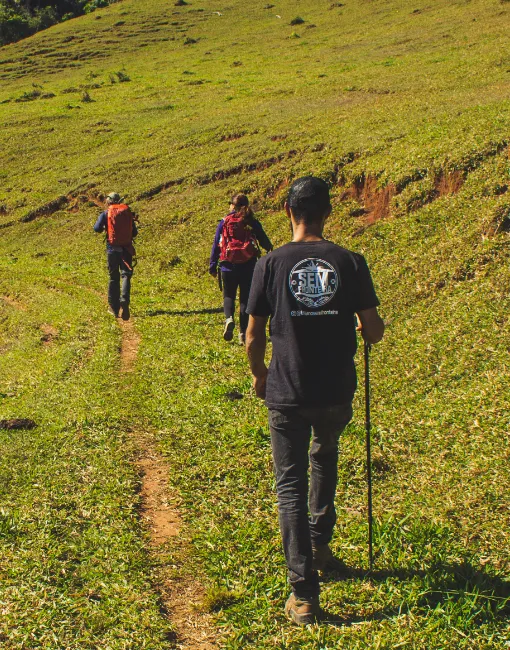
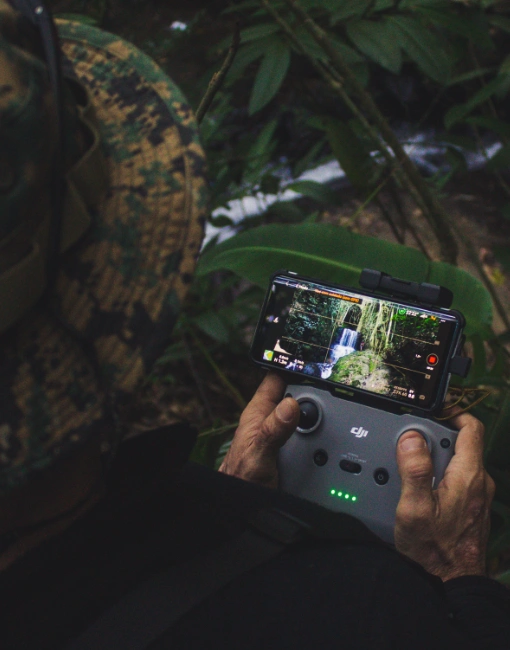
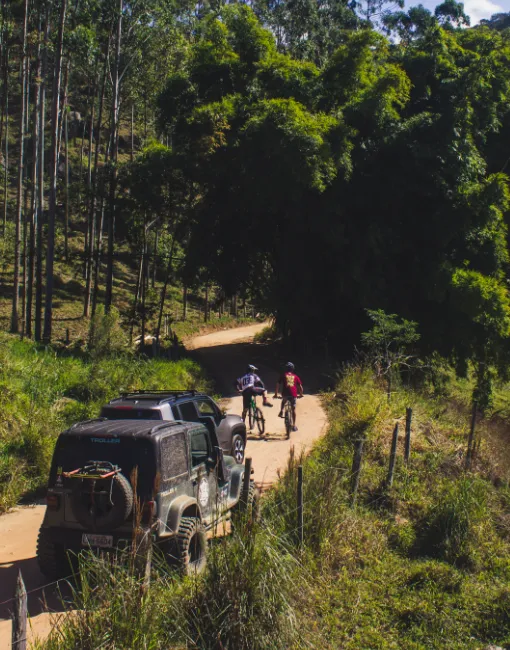
The eTrilhas team during mapping and audiovisual content production in the municipalities of Trajano de Moraes and Rio Claro.
The methodology developed by eTrilhas is based on seven stages:
- Survey and analysis of existing information
- Community listening sessions and participatory workshops
- Technical field mapping for route definition and validation
- Trail classification
- Signage planning
- Training of local stakeholders (entrepreneurs and guides)
- Content development and digital activation through the eTrilhas platform
It was from this methodology that the Caminhos de Trajano de Moraes project was born in 2022, already delivering significant results for the municipality, which was previously little known. In the state of Rio de Janeiro, eTrilhas also operates in Rio Claro and Paty do Alferes, both currently in the infrastructure implementation phase.
The expansion continues to other states, with three new initiatives underway in Mato Grosso do Sul and Alagoas, broadening the methodology’s application across different biomes and contexts throughout the country.
Caminhos de Trajano de Moraes
In the mountainous region of Rio de Janeiro, Caminhos de Trajano de Moraes brings together trails set amid beautiful natural scenery, which can be explored on foot or by bike, fostering people’s connection with nature and interaction with local culture and the region’s history.
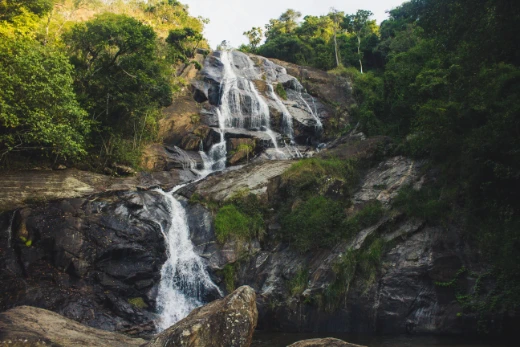
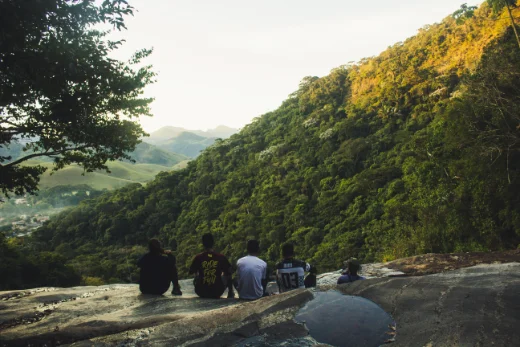
The circuit comprises five sections, featuring attractions such as church ruins, old colonial farmhouses, coffee and ornamental flower cultivation areas. Along the way, visitors discover viewpoints, waterfalls, natural pools, and a rich diversity of fauna and flora.
The project involved the planning, structuring, and sustainable development of nature tourism in the city and took approximately six months to complete. It encompassed route mapping, signage and structuring, content production for promotion, and the development of communication and marketing strategies.
Watch more videos of Caminhos de Trajano de Moraes on the eTrilhas YouTube channel.
Caminhos de Trajano de Moraes put the municipality on the ecotourism map. In just one year, 135 new individual micro-entrepreneurs linked to tourism were registered, while the number of companies enrolled in CADASTUR jumped from 14 to more than 60. Among the most impacted sectors are gastronomy, accommodation, and guiding services.
“When local entrepreneurs realize that a route is being structured, with access to information and an image bank, they get involved. I saw that happen very strongly in Trajano de Moraes”, highlights Paula Rascão.
The trails and their attractions can be consulted directly on the official destination app.
A Volta das Águas de Rio Claro
Until recently, the trails of Rio Claro, in the state of Rio de Janeiro, were rarely visited due to a lack of signage and promotion.
The situation began to change with the A Volta das Águas de Rio Claro project, launched in 2023. In August 2025, the first signposted sections were unveiled, along with the website and the official destination app, both customized from the eTrilhas platform.
“We are betting on ecotourism and adventure tourism to develop our municipality, generating jobs and income. Since we have very rich natural beauty, history, and culture, we developed the A Volta das Águas de Rio Claro project together with eTrilhas”, says Brindisi Biondi, Secretary of Economic Development, Culture, Tourism, Events, Sport, and Leisure of Rio Claro.
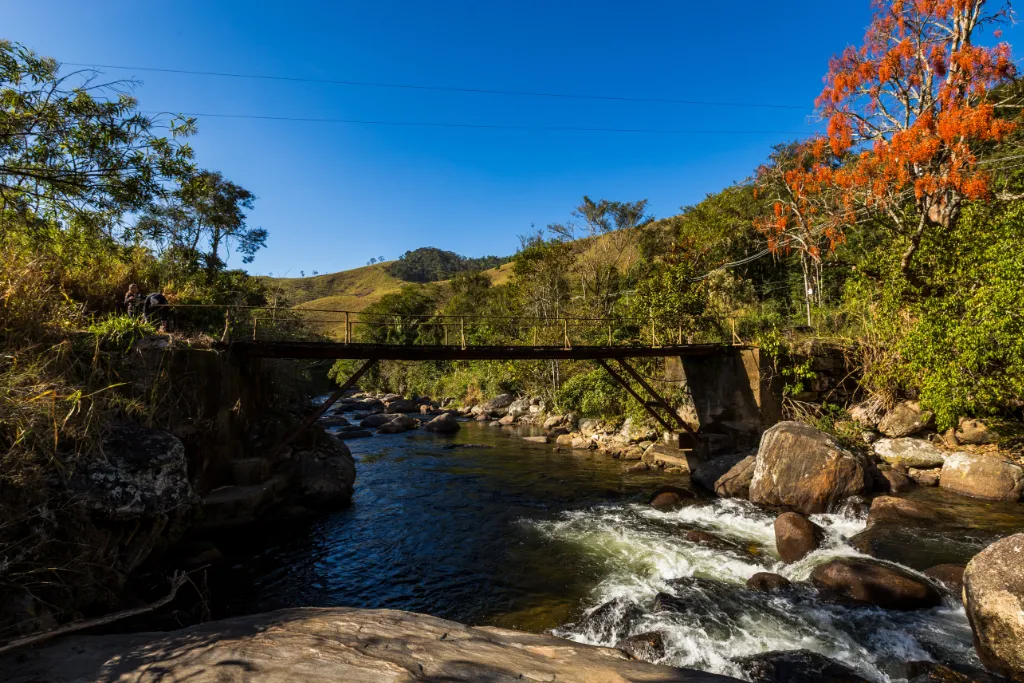
The long-distance trail connects the municipality’s five districts — Rio Claro (headquarters), Lídice, Passa Três, São João Marcos, and Getulândia — as well as the sub-districts Pouso Seco and Fazenda da Grama, totaling approximately 311 km. There are four modes: cycle tourism, hiking, horseback riding, and, in the future, canoeing on the Represa de Ribeirão das Lajes, currently under validation.
Along the route, visitors pass through areas such as the Parque Arqueológico e Ambiental de São João Marcos, historic farmhouses, and sections linked to the Caminho do Ouro and the coffee era, as well as the Igreja da Fazenda da Grama.
Natural highlights include the Pedra do Bispo, the municipality’s highest point; the Guaraná Quente region, known for its low temperatures (despite the name); the Cachoeira das Três Quedas; the Cachoeira da Borboleta; as well as old railway structures such as the Chuveirão and historic tunnels. The trail also passes through a quilombola community, deepening the connection with local culture.
According to the secretary, the partnership with eTrilhas was essential to making the project viable:
“No project gets off the ground without the support of a qualified company. Our project is ambitious, and having eTrilhas’s expertise was fundamental to ensuring the trail became safe, structured, and credible.”
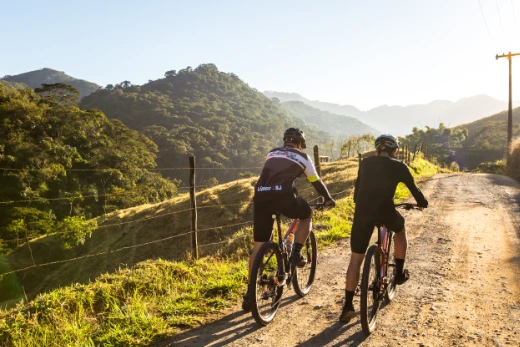
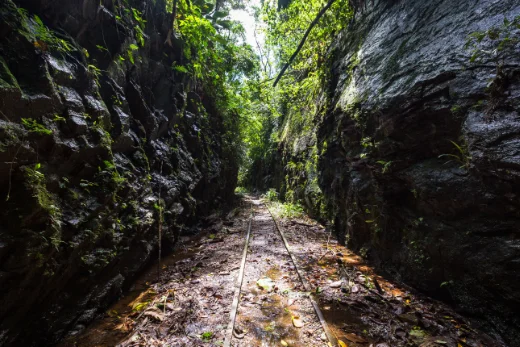
After implementation, direct impacts on the territory are already visible, such as the increase in the number of guesthouses, especially in the district of Lídice, where the V Jornada Cultural e Científica de Montanhismo will take place.
Paula Rascão shares that the community was involved from the very beginning and explains the stages of work carried out in Rio Claro:
“We conducted interviews with local stakeholders from all districts, groups of cyclists and hikers, as well as meetings with the Tourism Council and Secretariat. We validated the routes, adapted them to the local reality, divided them into sections, classified them according to ABNT standards, and delivered all the structured content within the app and the website.”
The future goal is to expand the long-distance trail, making the most of the municipality’s territorial potential and establishing Rio Claro as a reference destination for ecotourism.
Benefits for cities and visitors
For those visiting these destinations, the experience becomes safer and more autonomous. The structuring of trails reduces risks and makes navigation easier, especially with the use of technologies such as offline maps and up-to-date information.
Furthermore, access to interpretive content broadens understanding of the territory, its biodiversity, history, and culture. Another differentiator lies in the connection with the local entrepreneurial network, including guides, services, gastronomy, and accommodation.
For the cities, among the main benefits is the generation of local income through the activation of services such as guiding, food, lodging, and commerce. The trails also contribute to the decentralization of tourism, spreading visitor flow to rural and less explored areas, while strengthening local identity.
By valuing landscapes, traditional knowledge, and cultural practices, ecotourism helps preserve natural and cultural heritage, while at the same time encouraging environmental conservation.
This post is also available in: Português (Portuguese (Brazil)) Español (Spanish)