

Not every stove needs to be evaluated through the lens of minimum weight. In many contexts, especially in trekking where you’ll be cooking alone, that makes perfect sense. But when the need is to cook with more stability, use larger pots, and work with groups, the starting point changes. And that’s exactly where the Primus EasyFuel comes in.
In the courses of the Programa CAPACITAR, this is the stove we use when outdoor cooking is part of the field dynamics. In our kit, we always carry two. The choice came about because we needed a stove that balanced three very clear factors: cost, durability, and power.
According to the Primus website, the EasyFuel is a remote canister stove, with 3000 W of power, piezoelectric ignition, and designed for use by 1 to 4 people. The brand also positions it as a model suitable for larger pots, which helps clarify where it fits in.
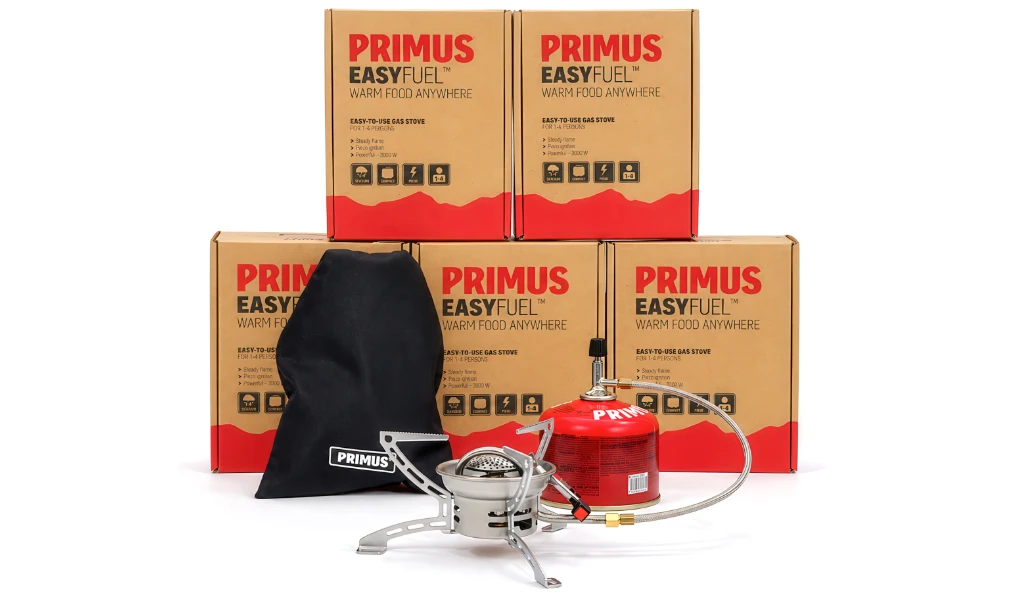
Specs
- Model: Primus EasyFuel
- SKU: P327743
- Type: Gas stove with remote canister
- Power: 3000 W
- Boil time (pot with heat exchanger): 2 min 50 s
- Boil time (regular pot): 3 min 50 s
- Dimensions: 160 x 85 x 88 mm
- Maximum diameter: 201 mm
- Weight: 385 g
Understanding what a remote canister stove is
Before talking specifically about the Primus EasyFuel, it’s worth understanding the type of stove it represents.
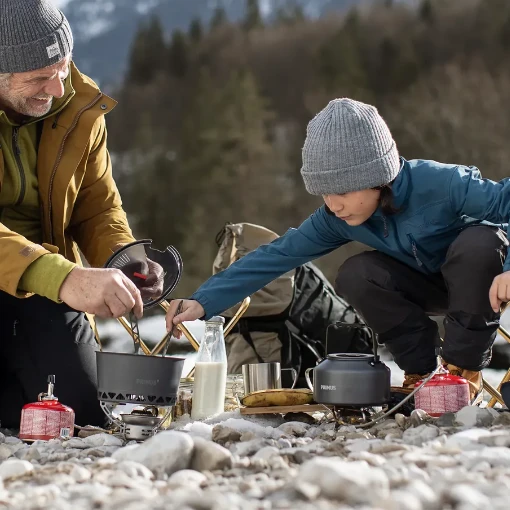
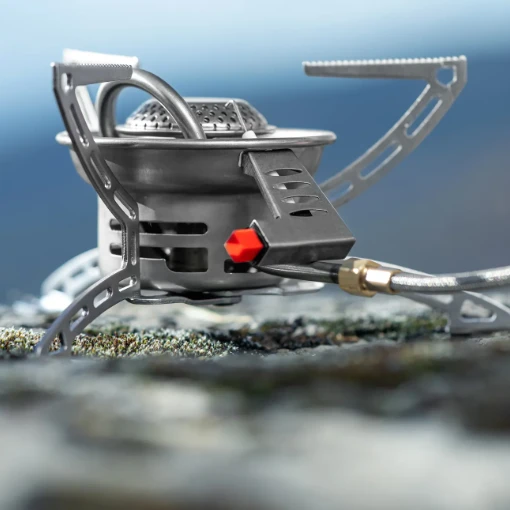
In a remote canister stove, the canister sits separately from the burner and is connected to it by a hose. This makes the whole setup lower to the ground and brings the center of gravity closer to the floor. In practice, the result is a more stable system, especially when using larger pots.
This is an important point because, very often, the difference between stoves lies not just in weight or power, but in the system’s architecture. Upright stoves (mounted directly on top of the canister) tend to work very well with small pots and solo use. Remote canister models, on the other hand, tend to make more sense when the goal involves greater stability, a wider support area, and a less minimalist outdoor kitchen.
Nothing stops them from being used with small pots, but it’s no coincidence that they’re usually associated with groups and situations where cooking is done in a more structured way.
Why we chose the EasyFuel
In our case, the choice started with a category decision.
There are more sophisticated and more expensive stoves, especially multi-fuel models, which can run on pressurized liquid fuel and, in most cases, also on gas canisters. Within Primus’s own lineup, models like the OmniFuel and the MultiFuel fall into this group — stoves far more tied to expeditions, high altitude, and contexts where fuel versatility is decisive.
But that wasn’t what we needed.
Our use is with gas canisters, in recurring courses, with simpler logistics and the need to repeat the same setup many times throughout the year. Since we needed to invest in multiple units, it made much more sense to go with a dedicated remote canister stove, far more affordable than a multi-fuel model.
Another important factor was our trust in Primus. We’re talking about a traditional Swedish brand, well established in the outdoor world, and that brings not only credibility but also something very relevant to our use: the possibility of maintenance. Since these stoves are used in a demanding routine throughout the year, it made sense to choose a brand that offers replacement parts and allows the equipment to be kept in operation for longer. We didn’t just want a rugged stove — we wanted a reliable and durable system for continuous use.
Within that category, the EasyFuel stood out as the most coherent choice.
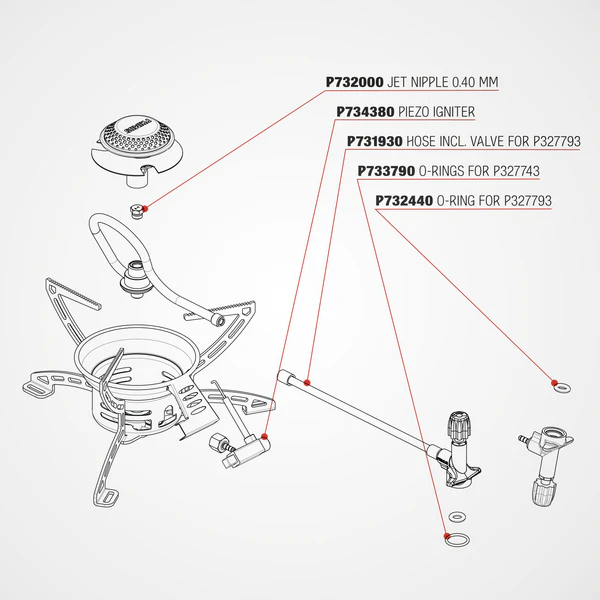
Exploded diagram of the Primus EasyFuel, showing some of the main components that can be replaced — an important point for those looking for durability and long-term maintenance.
Durability and power mattered more than weight
Within the remote canister line itself, there are lighter options, such as the Primus Express Spider, but with a more stripped-down proposition.
In our case, however, the priority was not to save as much weight as possible. The priority was to find a stove that could better handle use with larger pots, deliver good power output, and convey a greater sense of robustness for an intense working routine.
That’s where the EasyFuel stood out.
It delivers 3000 W, while the Express Spider works at a lower output of 2000 W. More than that, the EasyFuel felt better suited to the kind of use we make of it: frequent courses, constant assembly and disassembly, recurring transport, and the need to cook safely for groups.
Considering that the equipment will be used across around 30 groups per year, the choice stops being purely technical and becomes operational as well. It’s not enough to perform well on a single outing. It needs to hold up to repetition.
The EasyFuel in our use context
In the courses of the Programa CAPACITAR, outdoor cooking is part of the field dynamics. That means working with larger pots, preparing food for groups, and using the equipment on a recurring basis throughout the year.
That’s why we always carry two Primus EasyFuel units in the kit. In this context, it’s not just a camping stove — it’s a work tool.
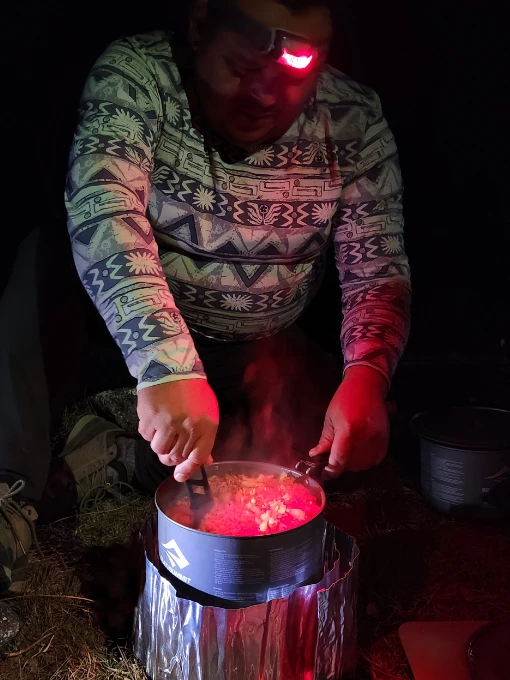
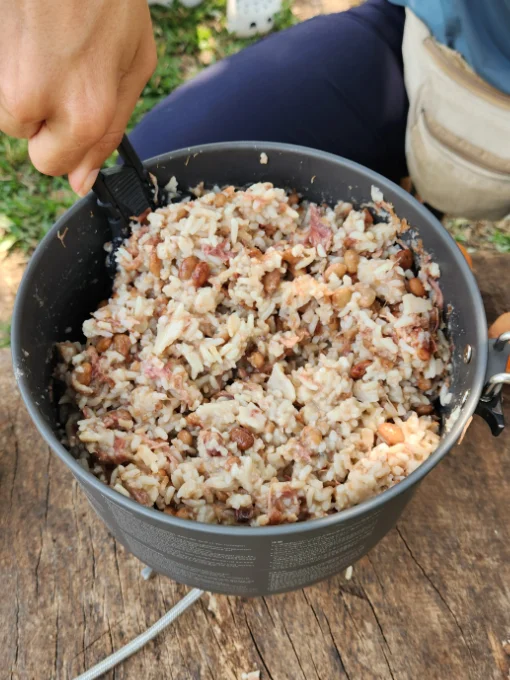
The 3000 W output, the stability of the remote canister system, the burner better suited for larger pots, and the piezoelectric ignition form a very coherent package for this type of operation.
Standard and Duo: what’s the difference?
The model we use is the EasyFuel Standard, compatible with threaded canisters using the Lindal valve standard — the same type of connection used in the canisters we rely on most in our day-to-day, such as the TekGas by NTK.
Primus also offers the EasyFuel Duo, whose valve accepts both threaded canisters (Lindal) and non-threaded valve canisters, like the systems found in some European markets. In practice, this is more relevant for those who travel frequently and may encounter different canister standards around the world.
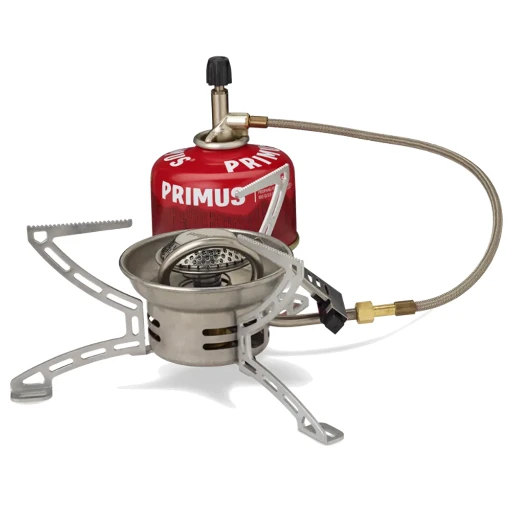 EasyFuel Standard
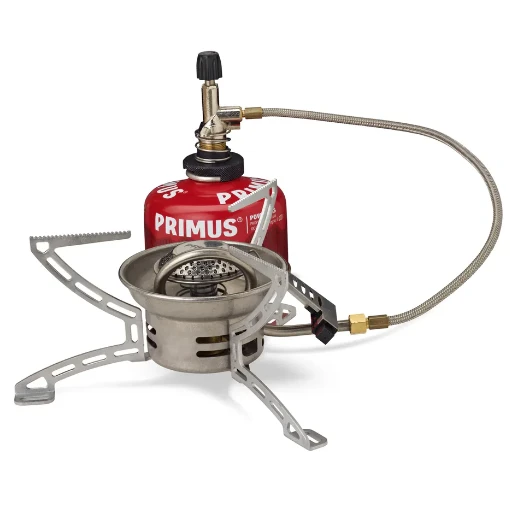 EasyFuel Duo
Verdict
The Primus EasyFuel makes sense when understood within the right category.
It was not designed to compete on minimalism. It was built to offer a more stable, robust outdoor kitchen that’s compatible with larger pots and group use. That’s why it became part of our Programa CAPACITAR kit.
Rather than investing in more expensive multi-fuel stoves or going with a lighter, more stripped-down remote model, we chose a middle ground: a stove with solid value within its category, robust construction, adequate power, and the possibility of long-term maintenance. For our context, that makes all the sense in the world.
This post is also available in: Português (Portuguese (Brazil)) Español (Spanish)