

Imagine you’re walking through a natural environment. On one side, you spot a traditional coffee or soybean plantation. On the other, the green of the forest predominates, along with the diverse colors of tomatoes, bananas, cassava, corn, and papaya.
Biodiversity is one of the characteristics of agroforestry, but not the only one. Unlike traditional agriculture, based on monoculture and dependent on agrochemicals and external inputs, agroforestry promotes harmony in nature, creating a more balanced system by integrating food production with tree planting.
Angélica Martins Facirolli and Anderson Arcanjoleto, from Franca, in the interior of São Paulo, had never planted anything until 2014, when they discovered agroforestry. They started in an urban garden and planted on friends’ land until they secured their own space, Sítio Santa Terra, in 2017.
Today, the former pastureland has 30,000 trees planted by them and more than 70 species sold in baskets. Among them are coffee, cassava, lettuce, herbs, ginger, yam, banana, papaya, lemon, sesame, okra, eggplant, and raspberry.
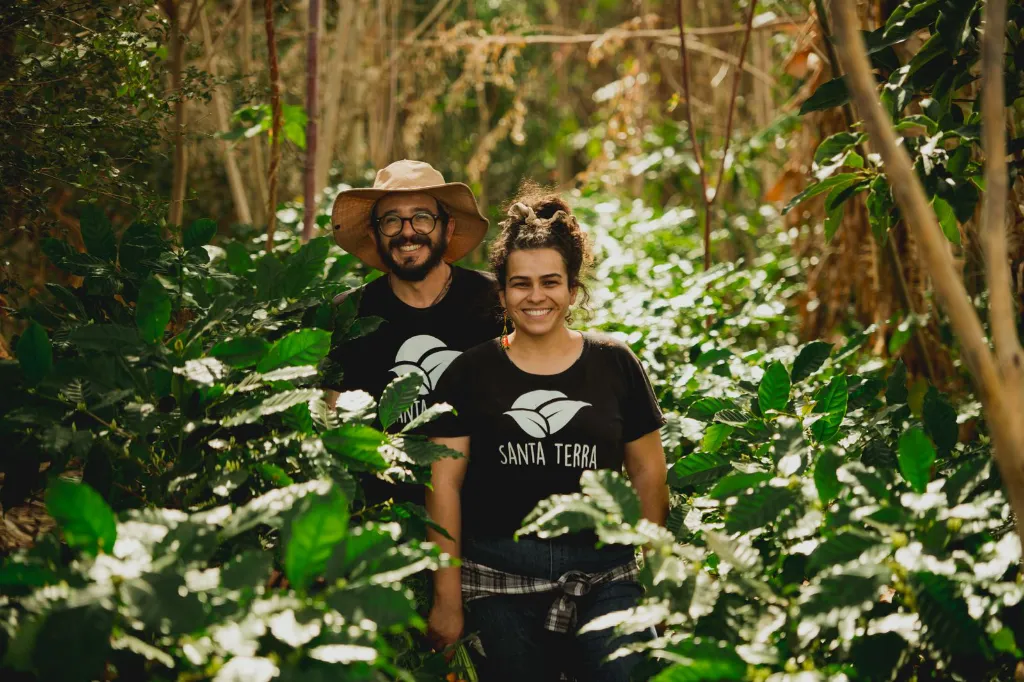
Angélica and Anderson in the Santa Terra small farm. Foto: Amanda Fortes
By adopting agroforestry, whether by growing our own food or choosing to buy from those who produce it, we benefit from dietary diversity and health, while also contributing to environmental conservation.
The Importance of the Forest for Agriculture
Agroforestry promotes a profound shift in how we understand soil function and how life is fostered. While the spread of monocultures has led to a loss of fertility, energy, and life in the soil, agroforestry promotes regeneration, increased biodiversity, and improved water infiltration. In this way, it helps combat the climate crisis and hunger, and supports healthier eating free of agrochemicals.
In fertile soil, various plants are grown together in a process called intercropping, organized according to the concept of stratification, by “layers” of light and life cycles, allowing bananas, coffee, ipê trees, and other fruits and flowers to coexist in the same area, exchanging energy and nutrients.
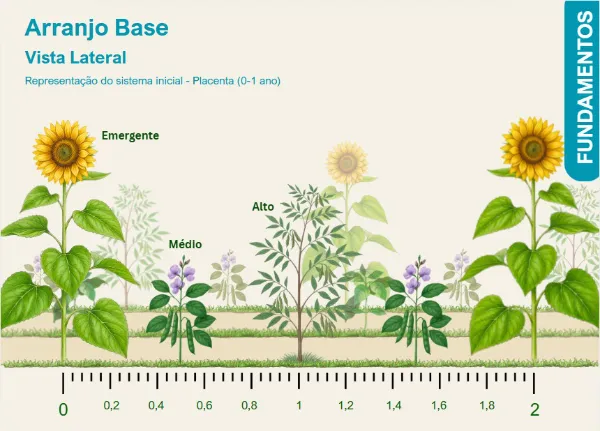
Consulting Project for Sítio das Mangueiras
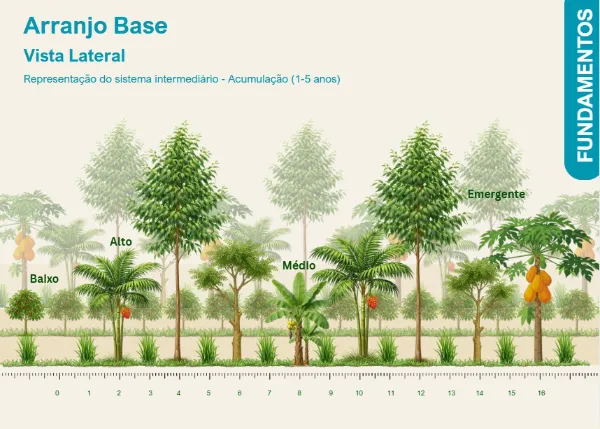
Consulting Project for Sítio das Mangueiras
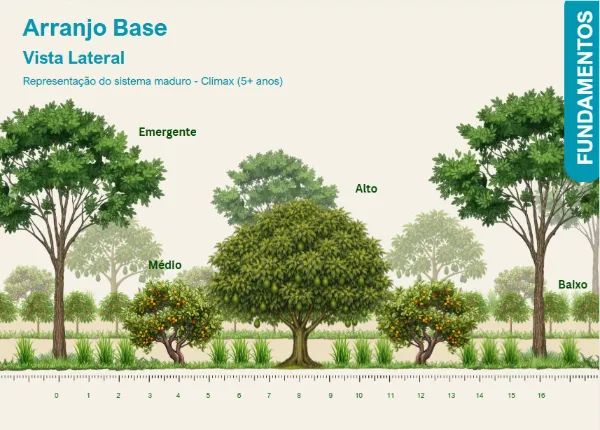
Consulting Project for Sítio das Mangueiras
According to João Victor Borsari, agroforestry technician at Sítio das Mangueiras, forests are able to balance moisture, water retention in the ecosystem, and energy exchange. “From the moment we practice agriculture that preserves this, we generate positive impacts on the planet,” he explains.
Namastê Messerschmidt, an agroforestry specialist with more than 20 years of experience, defines agroforestry as nature’s own strategy. “It creates organic matter, organizes different layers, and keeps the ecosystem in balance. Just as the organs in our bodies work in an integrated way, plants also interact with each other continuously.”
Low Dependence on External Inputs
Trees, with their deep roots, access nutrients in lower soil layers and produce high-quality organic matter. While conventional agriculture relies on urea to speed up plant growth, agroforestry taps into the abundance of nitrogen — about 78% of the air we breathe is made up of this element — through natural processes. Legumes, for example, form a symbiotic relationship with bacteria, fixing nitrogen and making it available to other species, such as banana trees.
The same happens with potassium. While conventional agriculture depends on inputs like potassium sulfate, agroforestry uses species that recycle this nutrient. Banana trees are an efficient example of this process, as are grasses, which help mobilize potassium from the soil and distribute it among plants.
Carbon Sequestration
Carbon is one of the main elements linked to the greenhouse effect. Unlike monoculture, which generally cannot fix carbon in the soil efficiently, agroforestry systems maintain this capture process continuously. Organic matter from pruning, branches, leaves, and fruit deposited on the ground incorporates this carbon into the earth. Through nutrient cycling, it returns to the plants, feeding the system again and strengthening soil fertility.
Regeneration of Water and Rivers
Tree roots play an important role in the soil’s water dynamics. Besides growing toward areas with greater water availability, they help draw in and retain moisture in underground layers, forming pockets of water in the soil. When streams or springs are nearby, the roots help increase rainwater infiltration and keep that moisture closer to the surface.
“With more available water and regenerated soil, the environment gradually recovers its natural flows, favoring the reappearance of rivers and springs,” João explains.
Protection Against Drought and Heat
The presence of trees creates shade, lowers soil temperature, and reduces water evaporation. This more balanced microclimate increases the resilience of the production system in the face of extreme weather events, such as prolonged droughts and heat waves.
How to Start Practicing Agroforestry
In her courses and on social media, Namastê encourages people to start even in small spaces, building from simple to more complex techniques.
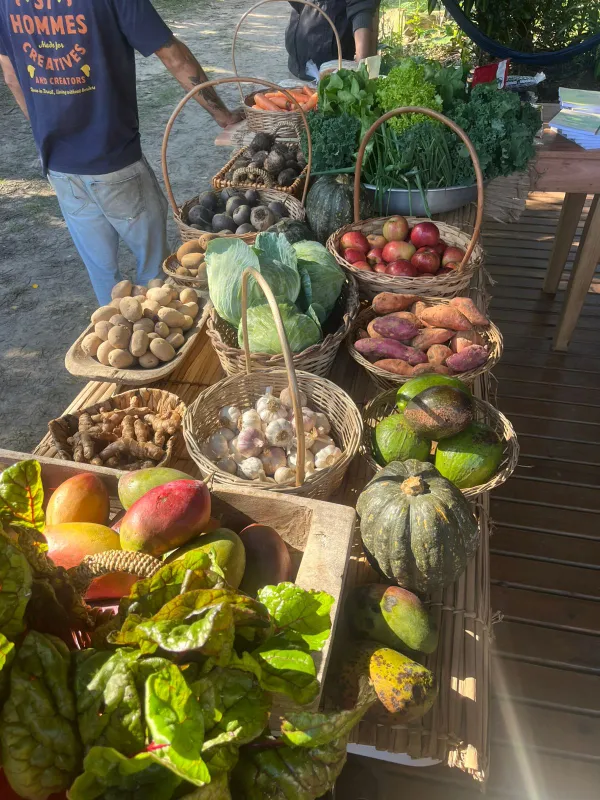
Alimentos produzidos na agroflesta da Namastê
– In a small backyard: start with agroecological combinations for your garden beds, such as flowers with vegetables. Don’t forget to try intercropping, like combining tomato, basil, and marigold, for example.
– In an apartment with a minimum of 4 hours of sunlight: plant herbs, vegetables, and fruits, such as chives, mint, strawberry, tomato, flowers, and medicinal herbs. On an apartment balcony, you can start with a 50×50 pot. “Vegetables produce quick results. In 30 days you can harvest rucula, in 45 days, lettuce. They also teach quick lessons,” Namastê explains.
– On a farm with space for a garden: here, Namastê recommends two options. Plant the garden among the fruit trees while they grow, or keep the garden in a fixed spot, but add a living fence of flowers and plant fruit trees nearby.
– In a dedicated agroforestry space: in tune with the region, you can combine species with different cycles, sunlight needs, and lifespans. “It’s best to start with annual plants, such as rice, beans, corn, squash, watermelon, sesame, and chickpeas. In the garden, add tomato, broccoli, lettuce, and arugula.”
Books such as Agroflorestando o mundo de facão ao trator and A Arte de Guardar o sol, along with publications available on the Cooperafloresta website, can help you take the first step.
It’s also essential to visit agroforestry sites and talk with the farmers themselves. Sítio Terra de Ganesh, run by Namastê, and Sítio Santa Terra, for example, are open for visits and also offer courses.
Agroforestry and the Promotion of Social Well-Being
A diverse system, like an agroforestry one, is also directly reflected in a diverse society. That’s why it’s important for agroforestry to be present in squares, urban parks, and other community spaces.
The collective Cangaço Cultural, formed by a residents’ association from the outskirts of Araraquara, in São Paulo, maintains an agroforestry system covering about 1,500 m² of planted area on land provided by the city government, benefiting the community with more than 50 types of fruits, legumes, and vegetables, as well as species like ipê, jacarandá, and jequitibá trees, plus biomass and other crops. In addition, gardens have been set up in 160 local residents’ homes.
“Agroforestry has a very important social role in reopening the discussion about growing food in low-income neighborhoods. It’s very common to see agroecology being discussed in rural settings or by people in better financial situations. Our concern is to bring this debate into the context of hunger and food insecurity. It’s hard to sell a dream, but we’re showing that it’s possible,” says Flavio Rodrigues.
Agroforestry System at the Gear Tips Training Center
Starting in July, participants in some Gear Tips CAPACITAR Program trainings will have access to an agroforestry system being implemented to promote healthy eating and environmental education.
Set up on the century-old Fazenda da Glória, in the Serra da Bocaina, in Arapeí (SP), the agroforestry system is in its initial phase and was designed to produce food, expand biodiversity, regenerate the soil, and strengthen a closer relationship with nature.
In the Agroforestry System (SAF) under development, vegetables, avocado, fig, ora-pro-nóbis, banana, araucaria, cacao, cambuci, beans, and various other species have already been planted. The farm already grows blackberry, persimmon, lemon, and tangerine.
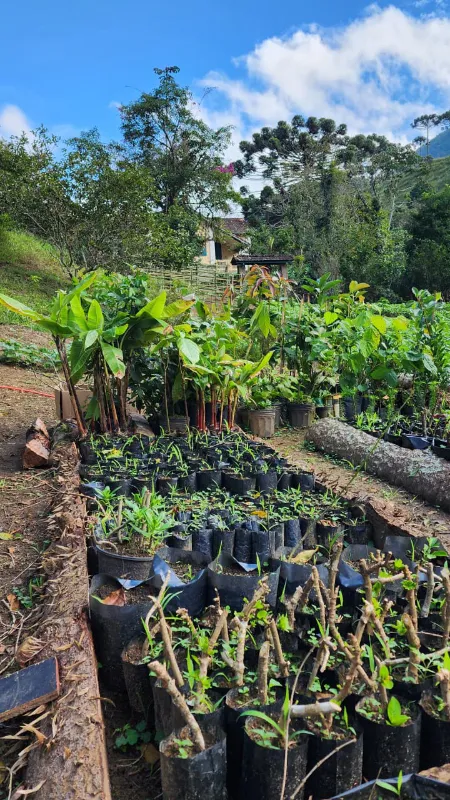
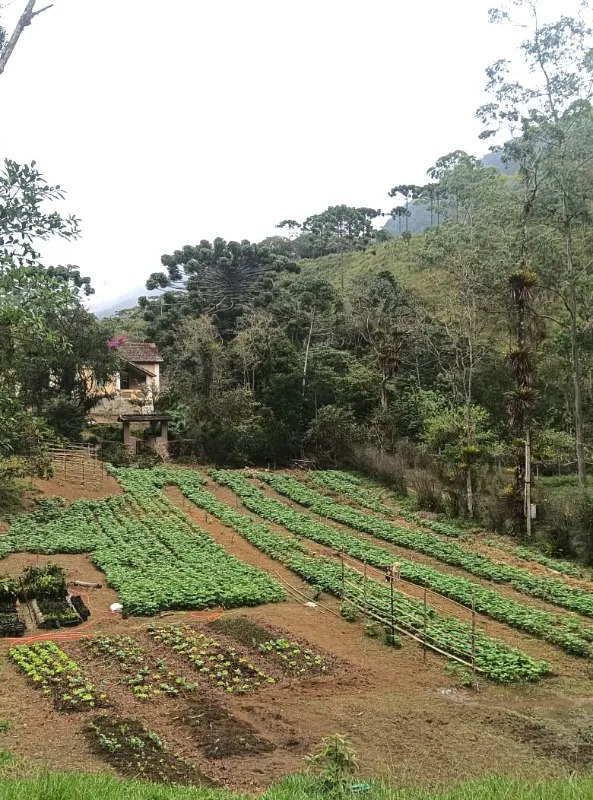
Agroforestry at the Gear Tips Training Center
On the course schedule, Mountain Environment Orientation and Navigation (CONAM) is already set for August 29 and 30, and Leave No Trace – Instructor Level 1 for September 1 and 2.
This post is also available in: Português (Portuguese (Brazil)) Español (Spanish)