

Traveling by motorhome was always the dream of Vivian Telles, but faced with the high cost, she found an alternative: turning an ordinary car into her home on wheels. The initial plan was to stay on the road for three months, but the journey in her mini motorhome ended up lasting a year and a half. Vivian traveled alone and covered destinations in Argentina, Chile, Bolivia, Uruguay, and Paraguay.
One of the featured women in the book Mulheres na Natureza – Práticas, inspiração e acolhimento, soon to be released by Gear Tips, Vivi shares lessons and tips for those who want to embark on this experience safely.
1. Adapt the planning to your reality
The first step is to build a plan that fits your available budget. Define the vehicle, estimate the trip’s costs, and consider how long you’ll be able to stay on the road. “I always thought that doing this trip by motorhome would bring me more comfort, safety, and stability. But during my research, I realized it would be possible to do it with an adapted car.”
When choosing the vehicle, prioritize reliable mechanics and a model with easily replaceable parts, especially if you intend to cross borders. Vivi chose a car that would serve her both during and after the expedition, focusing on safety in case the car broke down in another country. The interior layout was designed for everyday life. An adapted bed and fixed organizer boxes helped keep the “home” tidy and optimize trunk space.
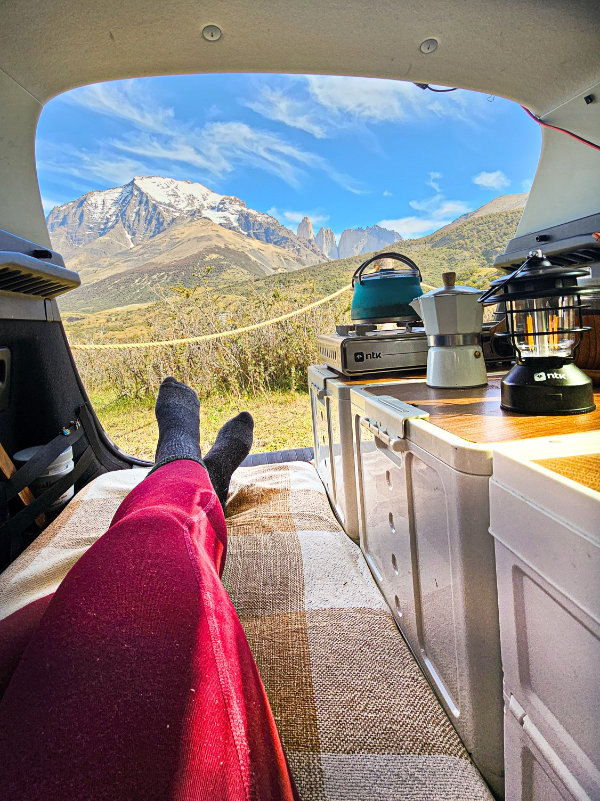
Interior structure of the car adapted by Vivian Telles
Before the trip, have a preventive inspection done by a trusted mechanic, get insurance that covers all the locations on your route, and put together a repair kit for emergencies. It’s also essential to learn basic skills, such as changing a tire, checking tire pressure, checking oil levels, and making small repairs.
Besides vehicle insurance, be sure to also get travel insurance with coverage for your planned destinations.
2. Plan your route, but leave room for the unexpected
For a first expedition, Vivi recommends putting together a detailed route, but without giving up the flexibility to discover new places along the way.
“I would plan the route on GPS and, as I went along, research the next stop, asking other travelers on the road for tips. I chose not to see some tourist spots, but I discovered little corners that a rigid itinerary would never have shown me, like small villages where I could interact with local people.”
Vivi recommends using Google Maps, the main app used by travelers. It lets you download routes offline, ensuring you won’t lose your route when there’s no internet signal. Before hitting the road, map out your next destination and note points like gas stations and towns with campgrounds and guesthouses.
Another interesting feature of the app is the ability to save points of interest. “I found an abandoned hot spring in the Andes Mountains, off the beaten path, and saved that spot two months before the trip. It was one of the most incredible places I visited.”
3. Choose lightweight and functional gear
When the car is also your home, every inch counts. So, opt for compact, lightweight gear suited to the type of trip.
Communication
Starlink satellite internet was essential for Vivi to be able to work during the expedition, stay in touch with family, and reach her insurance provider if needed. During treks, she used a SPOT satellite communicator.
It’s also important to consider extra batteries and, if possible, a solar panel to ensure power autonomy.
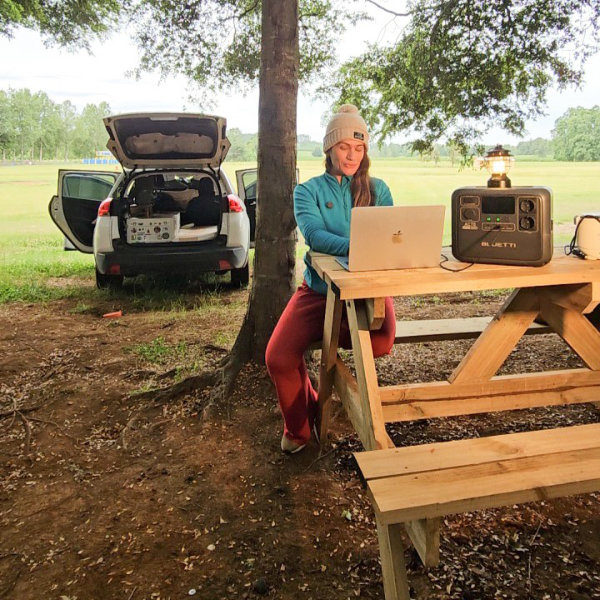
Vivian Telles balanced traveling with work
Clothing
Even in summer, weather conditions can change quickly. That’s why it’s a good idea to use a layering system, which helps regulate body temperature:
- First layer: responsible for keeping the body dry, this “second skin” is made up of long-sleeve tops and pants.
- Second layer: retains the heat generated by the body. These are fleeces and jackets with synthetic or down insulation
- Third layer: protects against wind and rain. Invest in anoraks.
Choose technical, lightweight, quick-drying clothing.
Kitchen
Bring compact pots, cutlery, and utensils, as well as a stove, fuel, matches, or a lighter. Also plan your food supply according to the length of the trip and the availability of markets along the way.
Sleep system
Besides a tent, a sleeping pad makes a real difference in preventing heat loss to the ground, improving comfort and safety at night. For Vivi, a down sleeping bag was also an investment that brought more comfort.
Round out your gear with a first aid kit and a basic vehicle tool and repair kit.
4. Carefully research where you’ll spend the night
During the trip, Vivi used the collaborative app iOverlander to find campgrounds, gas stations, and other services recommended by travelers. “It works really well, even offline, letting you download maps and check saved locations. It’s used by travelers all over the world.”
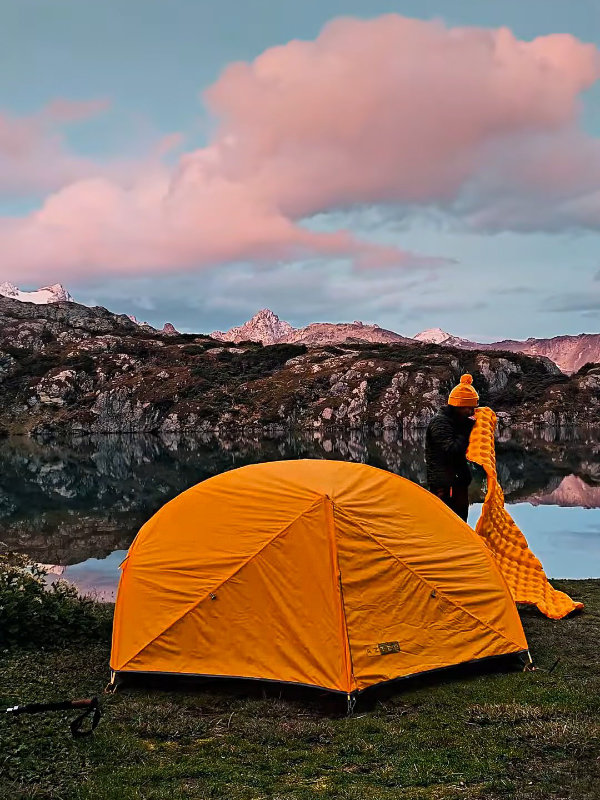
Vivi at the Laguna del Caminhante campground (Ushuaia), where she went trekking
If you choose guesthouses, prefer places with a garage, since much of your gear will stay inside the car. Another tip is to park the vehicle in a way that allows for a quick exit, if needed.
It’s also worth researching safety levels in advance, avoiding areas known for high rates of theft and robbery.
To increase safety, Vivi recommends an internal car alarm and a perimeter system set up around the tent, capable of sounding an alert if someone approaches. Depending on the country visited, some travelers also choose to carry personal defense items, always respecting local laws and knowing how to use them properly, such as pepper spray.
5. Learn to move according to the weather
Throughout the expedition, Vivi used the Windy app to track wind, rain, and snow forecasts before deciding when to continue traveling. She also talked with locals to better understand local conditions.
One point she emphasizes is paying attention to wind direction and intensity. Strong crosswinds can destabilize the car, increasing risk during passing maneuvers, especially around trucks. Headwinds, meanwhile, increase fuel consumption and require more effort while driving. Whenever possible, choose to drive with favorable winds, coming from behind the vehicle, which makes driving more comfortable and helps reduce fuel consumption.
6. Build a support network
Before setting off, talk to people who have already done this type of trip and join WhatsApp, Facebook, and other traveler community groups. Besides exchanging experiences, these spaces often provide up-to-date information about roads, borders, campgrounds, and safety issues.
Also keep family or friends informed about the day’s route, planned destination, and any possible changes along the way.
Vivian Telles’s story shows that great trips don’t depend on the perfect vehicle, but on planning, preparation, and the courage to begin. With knowledge and responsibility, any woman can turn the dream of exploring nature on wheels into a transformative experience of freedom and discovery.
This post is also available in: Português (Portuguese (Brazil)) Español (Spanish)