

The practice of separating plastics and packaging for recycling is already common in many Brazilian households. But what do you do with the food scraps left over in your kitchen?
Organic waste accounts for about 50% of household trash. Although it may seem harmless, it is usually disposed of in dumps and landfills, bringing serious consequences for health and the environment.
Among the impacts is the emission of methane, a greenhouse gas at least 30 times more harmful than CO₂, generated by the decomposition of these residues without oxygen.
Another problem is the production of leachate. Organic waste is composed of about 70% water, and that liquid does not evaporate in dumps — it seeps into the soil. When mixed with other materials present in the landfill, it forms a toxic leachate that causes environmental damage.
There is also the impact of transporting these residues, with trucks that consume fuel and emit pollutants while carrying them to dumps and landfills.
What many people still don’t know is that organic waste is the only kind we can treat at home in a simple, efficient, and educational way. Home composting reduces environmental impacts and also transforms trash into plant fertilizer, even in urban environments. A practical, accessible solution within everyone’s reach, which depends only on awareness and attitude.
What is composting?
Composting is a natural and biological process of transforming organic waste — such as food scraps and garden residues — into a nutrient-rich compost that can be used to improve soil health.
This process occurs through the action of microorganisms, such as fungi and bacteria, as well as macroorganisms. In home composting, earthworms are quite common and play an important role in decomposition.
By adopting this practice, we not only reduce the amount of waste sent to landfills, but also return essential nutrients to the soil.
The main composting techniques are:
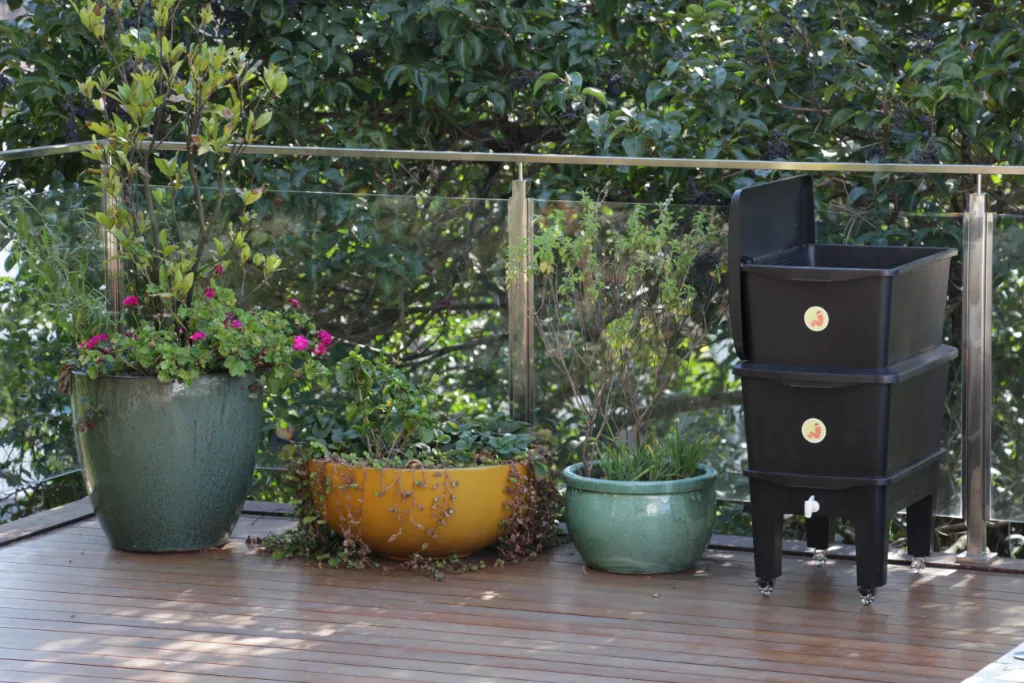
– Worm composting (vermicomposter): ideal for residential use, this technique uses a compact composter that takes up little space (about 40 x 60 cm). In addition to solid fertilizer, the system allows for the collection of the liquid produced, which, instead of being discarded in dumps, can be used as a high-quality biofertilizer.
– Thermophilic composting: carried out with bacteria and recommended for large volumes of waste, generally starting at 10 kg per day and reaching up to 100 tons daily. In this technique, a controlled environment is created that favors bacterial activity, ensuring an efficient process with no odors and no attraction of disease vectors. The bacteria enter intense activity, feeding and multiplying, which generates heat and characterizes the thermophilic process.
4 myths about home composting
Before explaining how you can adopt this practice at home, let’s debunk some myths that prevent many people from getting started, mainly due to lack of information.
Helping us in this mission is Cláudio Spínola, founder of Morada da Floresta, one of the leading references on the subject:
1. The house will smell bad
This myth arises because many people associate organic waste with the smell of accumulated garbage bags or the odor of the collection truck. However, waste only produces bad odors when it decomposes without oxygen, as happens inside plastic bags. In home composting, this does not occur. The residues are covered with sawdust, which allows oxygen to circulate. The result is a very mild smell, almost imperceptible.
2. Composting attracts mosquitoes
Both bad odor and the presence of mosquitoes indicate that something is wrong in the process. When composting is done correctly, it does not attract insects. The lack of oxygenation can generate odors and, consequently, attract mosquitoes. Without smell, there is no attraction.
3. Composting is too much work
Many people avoid starting because they think it will be yet another task in their routine. In practice, it is simple and can even make daily life easier. All you need to do is separate organic waste into a container by the sink and, when it is full, transfer it to the worm bin, covering it with sawdust. Then just wash the container and start again. This process takes less than two minutes.
4. Fear of worms roaming the house
The worms used in the composter, known as Californian worms, are suited for this type of system and different from garden worms. They do not like light and stay inside the worm bin, where they find everything they need. There is no reason for them to leave. As Cláudio explains, in some situations, one or two may escape if the environment is completely dark, but this is not common.
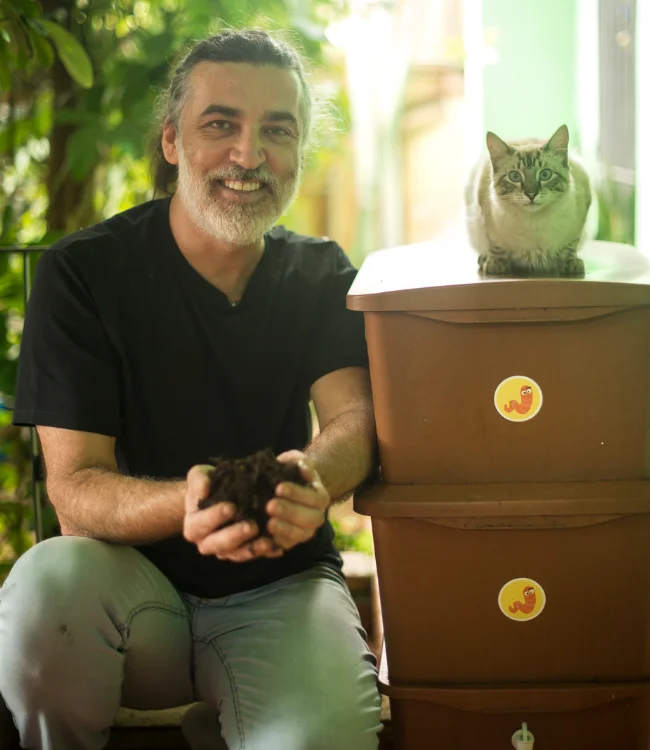
Cláudio Spínola, founder of Morada da Floresta
How to start home composting
Plan the location
The composter should be kept out of direct sunlight and rain, preferably close to the kitchen, to make the daily disposal of organic waste easier.
Choose the composter
Consider the volume of organic waste you generate and the number of people in your household.
A home composter typically consists of three compartments:
- Upper boxes (digesters): these are two boxes where composting takes place. They have holes in the bottom for liquid drainage and, eventually, for the migration of worms between them.
- Lower box (collector): located at the base, it should have a tap to collect the liquid biofertilizer produced during decomposition.
If you prefer a practical, compact, and functional model, you can opt for the Composteira Humi, developed by Morada da Floresta based on ecodesign principles. In addition to its aesthetics, it makes cleaning easier and features legs and wheels, which helps with moving it around during household routines.
Acquire the worms
Worm starter colonies are groups of adult worms, generally of the Red California species, used to kick off vermicomposting. They reproduce quickly and are essential for humus production. The packages sold by Morada da Floresta, for example, contain between 200 and 300 worms.
Choose the dry plant material to cover the waste
Sawdust helps aerate the compost, controls moisture, and creates a barrier against mosquitoes, while also preventing odors. It should be used to cover organic waste and can be found at lumber yards, pet shops, and the Morada da Floresta store. Dry leaves, straw, or grass can also be used, but in the beginning sawdust tends to offer better results due to its superior moisture absorption. Cláudio recommends using sawdust for the first three months for the best experience.
Use a countertop bin
Use a container to temporarily store organic waste. The ideal is to keep it always covered and without a plastic bag, avoiding the generation of more trash. When it is full, transfer the contents to the worm bin. Additionally, a small shovel to remove the fertilizer and a watering can to dilute and apply the liquid biofertilizer to plants are recommended, since it is quite concentrated.
In practice: how to operate the home composter
When you acquire the composter, place the worms, the organic waste discarded from the countertop bin, and the sawdust into the first box. This box will be alternated during the composting process with the second digester box, positioned in the middle.
When the first box is full, it is time to start using the second one, swapping their positions. Remember to check that the holes in the digester boxes are clear. They should not be covered by sawdust or blocked, as they are essential for liquid drainage and air circulation.
While the second box is being fed, the first remains at rest, completing the composting process. The recommendation is for each box to take about 30 days to fill up, ensuring enough time for the process to happen efficiently.
When the compost is ready, it should be removed to make room for new waste. This cycle repeats continuously.
“You start composting with a package of about 250 worms, which feed and multiply over time. As the population grows, the process becomes increasingly faster”, explains Cláudio.
But don’t worry: there is no risk of overpopulation. Worms naturally regulate their reproduction according to the available space and food supply. They can also survive for up to three months without new waste additions, which means you can travel without worry.
Since the digester boxes have holes, excess liquid drains into the collector box. The recommendation is to open the tap once a week to avoid moisture buildup. This liquid is a nutrient-rich biofertilizer that, when diluted in water, can be used to nourish plants.
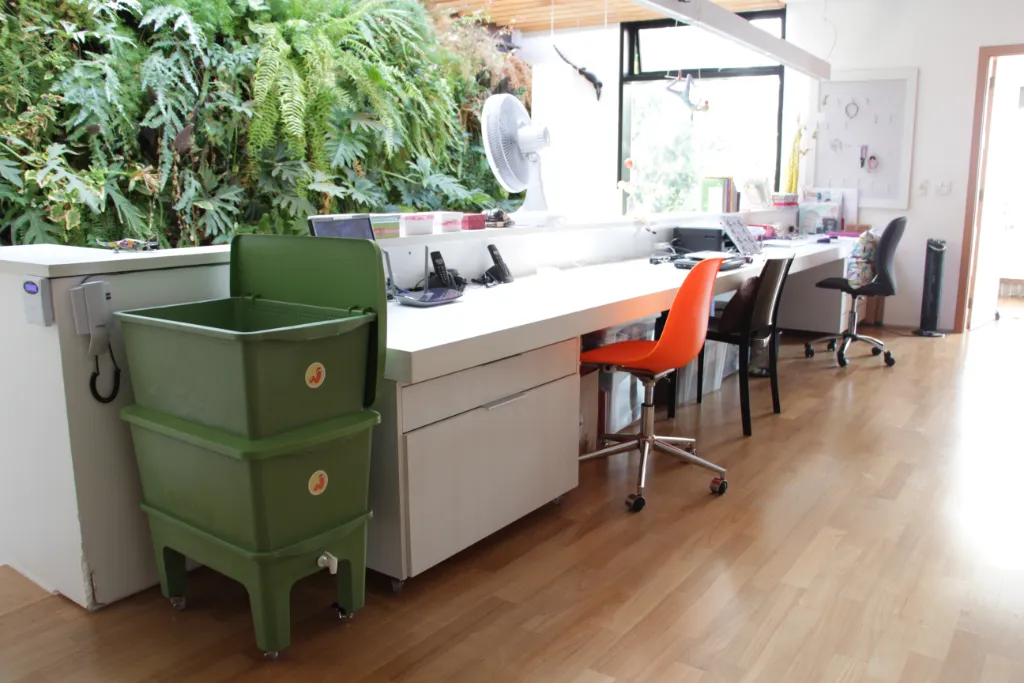
What can and cannot go in the composter
According to Morada da Floresta’s recommendations, foods are classified based on the impact they have on the worms’ well-being. Some items, such as citrus fruits, can cause discomfort and should be used in moderation to maintain the system’s balance.
What can be composted freely: Fruits; vegetables; greens; cereals, grains, and seeds; breads and cakes; eggshells; coffee grounds and filters; tea bags; yerba mate; mushrooms (shiitake, shimeji, and champignon).
What can be used in moderation (no more than 20%): Citrus fruits; cooked foods; napkins and paper towels; ois and fats; flowers; medicinal or aromatic herbs; strong seasonings (such as pepper, garlic, and onion); dairy products; liquids (such as yogurt, milk, soup and bean broths); lemon.
Not recommended: meat, feces from carnivorous animals, and whole coconut.
What changes in the life of those who practice home composting
Pedro Henriques Fabrino has been practicing home composting for two years. The Minas Gerais native chose the Composteira Humi mainly for its practicality and ergonomics, which make biofertilizer extraction easier and encourage the whole family to engage in the process. Despite the initial challenges — especially in adapting to sawdust use — Pedro sees composting as a transformative experience: “Everything in life is a construction. When we get used to thinking that everything is hard, we end up living with many barriers. Today, I have a relationship of love with the worms, with the earth, with nature.”
When he is away from home, he notices even more the impact of waste in daily life: “Whenever I travel, I think about the amount of trash we generate in hotels. Sometimes I come back with waste to dispose of in the right place.”
For Cláudio, the composter becomes an attraction of the home, sparking curiosity and interest: “The person feels good, happy, and wants to share it. They also start to notice the amount of waste and packaging they generate, and to reflect on their diet and other aspects of life.”
Over time, those who adopt composting begin to observe their surroundings more closely: streets, squares, and public spaces take on new meaning. Interest grows in dry leaves for mulching, community gardens, and local initiatives.
Composting, therefore, strengthens the sense of community, broadens one’s view of the neighborhood, and deepens the connection with nature.
From home practice to use in educational projects
Composting is also a practice that gains strength when it stops being just an idea and becomes part of everyday life.
Pedro Lacaz Amaral, founder of Gear Tips, has been composting at home since 2018, using a Humi composter. The experience showed, in practice, how separating organic waste changes one’s relationship with trash, with food, and with the very cycle of nature.
With the implementation of the Gear Tips Training Center at Fazenda da Glória, this approach will also be incorporated into the space’s operations. The plan is to work with composting in two complementary ways: through a HumiBox composter, suited for managing organic waste generated in the kitchen, and also through direct in-ground composting, integrated into the agroforestry system.
More than a solution for reducing waste, composting becomes part of an educational process. It helps show, in a simple and concrete way, that what was once treated as trash can return to the soil as fertility, closing cycles and bringing people closer to nature.
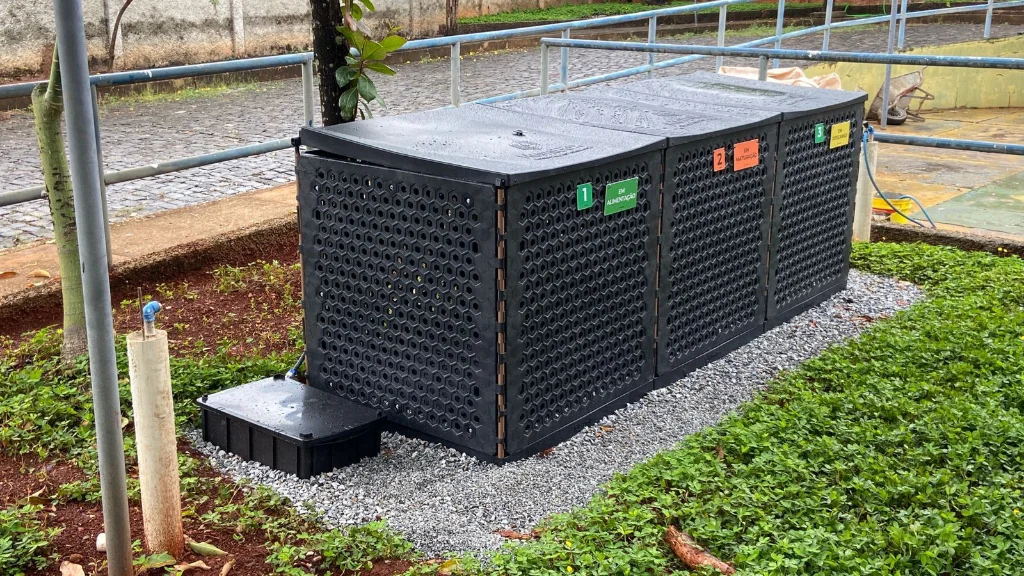
Composter to be implemented at Fazenda da Glória
This post is also available in: Português (Portuguese (Brazil)) Español (Spanish)